Outside-In Code Review
ythirion/outside-in-code-review-skill
Análise estruturada de codebases desconhecidas, camada por camada
Ver no GitHubSkill estruturada para agentes de IA explorarem e avaliarem codebases desconhecidas de forma sistemática, começando por artefatos visíveis (docs, git history, CI/CD) e aprofundando progressivamente na estrutura e qualidade do código. Automatiza descoberta técnica, geração de diagramas de arquitetura e análise de qualidade em ~1 hora.
Instalação
npx convez-ai ythirion/outside-in-code-review-skill1 comando no terminal: detecta o formato do repositório (marketplace ou plugin avulso) e instala via Claude Code. Requer Node 18+ e o Claude Code instalado.
Métricas
Casos de uso
- Auditoria técnica e code review de projetos novos ou herdados
- Engenharia reversa de produtos para gerar backlog e documentação
- Avaliação rápida de qualidade de código e identificação de code smells
- Onboarding técnico acelerado em repositórios complexos
Veredito

Skill bem-estruturada que transforma code review em processo sistemático e reproduzível. Excelente para reduzir tempo de compreensão de codebases e automatizar descoberta técnica inicial, com metodologia clara e catálogo extenso de code smells.
README
A tradução para o português deste README ainda está na fila.
Outside-In Code Review


A structured skill for AI agents to explore and review unknown codebases — layer by layer, from surface artifacts down to implementation detail.
"We spend up to 60% of our time reading code... yet treat this as a side effect rather than a skill to cultivate."

What is Outside-In Code Review?
Outside-In Code Review is a systematic methodology for understanding unfamiliar codebases without getting lost. It starts with what is visible without reading code (docs, git history, CI/CD), then progressively dives into code structure, quality, and behavior.
Applied with AI, it becomes a rapid discovery process: an agent can reverse-engineer a product backlog, generate architecture diagrams, and rate code quality — all from a cold start, in ~1 hour.
Articles
This skill is based on my two articles:
- Outside-In Discovery: A Structured Approach to Unknown Codebases
- Augmented Outside-In Discovery with Claude Code
Repository Structure
outside-in-code-review/
├── .claude-plugin/
│   └── plugin.json              # Plugin manifest (claudepluginhub.com)
├── commands/                    # Slash commands installed by the plugin
│   ├── gather_product_insights.md
│   ├── explain_the_architecture.md
│   ├── detail_flow.md
│   └── rate_code_quality.md
├── skills/
│   └── outside-in-code-review/
│       ├── SKILL.md             # Skill definition: frontmatter metadata + execution protocol
│       └── references/
│           └── catalog.md       # All 28 code smells — definitions and refactoring guidance
├── examples/
│   ├── Report.md                # Sample Report.md for a fictional codebase
│   └── details/                 # Sample detail files (Backlog, C4, CodeQuality)
├── scripts/
│   └── package.sh               # Builds outside-in-code-review-<version>.zip
├── README.md                    # This file
├── METHODOLOGY.md               # The 10-step outside-in framework
├── checklist.md                 # Quick reference checklist
├── LICENSE
└── .github/
    └── workflows/
        └── release.yml          # Packages .skill and creates draft release on version tag
Installation
Option 1 — Claude Plugin Hub (recommended)
Install directly via the Claude Plugin Hub:
outside-in-code-review
The plugin installs the skill and all slash commands automatically. From any Claude Code session, just describe what you want:
"Review this codebase" / "Technical audit" / "Help me understand this repo"
Option 2 — AI agent skill (manual)
Download the latest zip from the Releases page, unzip, and install:
mkdir -p ~/.claude/skills/outside-in-code-review
cp -r skill/* ~/.claude/skills/outside-in-code-review/
Option 3 — Individual slash commands
cp commands/* ~/.claude/commands/
Option 4 — From source
bash scripts/package.sh
# produces outside-in-code-review-<version>.zip

unzip outside-in-code-review-*.zip

# Install as a skill
mkdir -p ~/.claude/skills/outside-in-code-review
cp -r skill/* ~/.claude/skills/outside-in-code-review/
Claude Code loads skills from
~/.claude/skills/and commands from~/.claude/commands/(global) or.claude/commands/(project-level).
Release a new version
- Bump the
versionfield inskills/outside-in-code-review/SKILL.md(and in.claude-plugin/plugin.json) - Commit and push
- Tag the commit with the matching version:
git tag v1.1.0
git push origin v1.1.0
The GitHub Action (.github/workflows/release.yml) will:
- Package
outside-in-review.skillfrom source - Validate that the tag matches the version in
SKILL.md - Create a draft release on GitHub with the
.skillfile attached
The Claude Plugin Hub auto-discovers the update within 2 hours once the tag is pushed.
Open the draft on GitHub, review the release notes, and publish when ready.
Usage
Running a full discovery session
Once the skill is installed, just describe what you want in any Claude Code session:
"Review this codebase" / "Technical audit" / "I don't know this codebase"
The skill runs all four phases automatically and produces outside-in-review/Report.md + outside-in-review/details/{Backlog,C4,CodeQuality}.md.
Running individual steps
# Generate C4 architecture diagrams only
/explain_the_architecture

# Rate code quality with smell detection
/rate_code_quality

# Trace a specific feature flow
/detail_flow User Login
Sample Output
See examples/Report.md for a complete example of what the discovery report looks like.
Core Principles
- Outside before inside — surface artifacts reveal as much as code
- AI as cognitive reducer — let the agent build the first mental model
- Human validation is mandatory — all AI outputs must be verified with stakeholders
More explanations
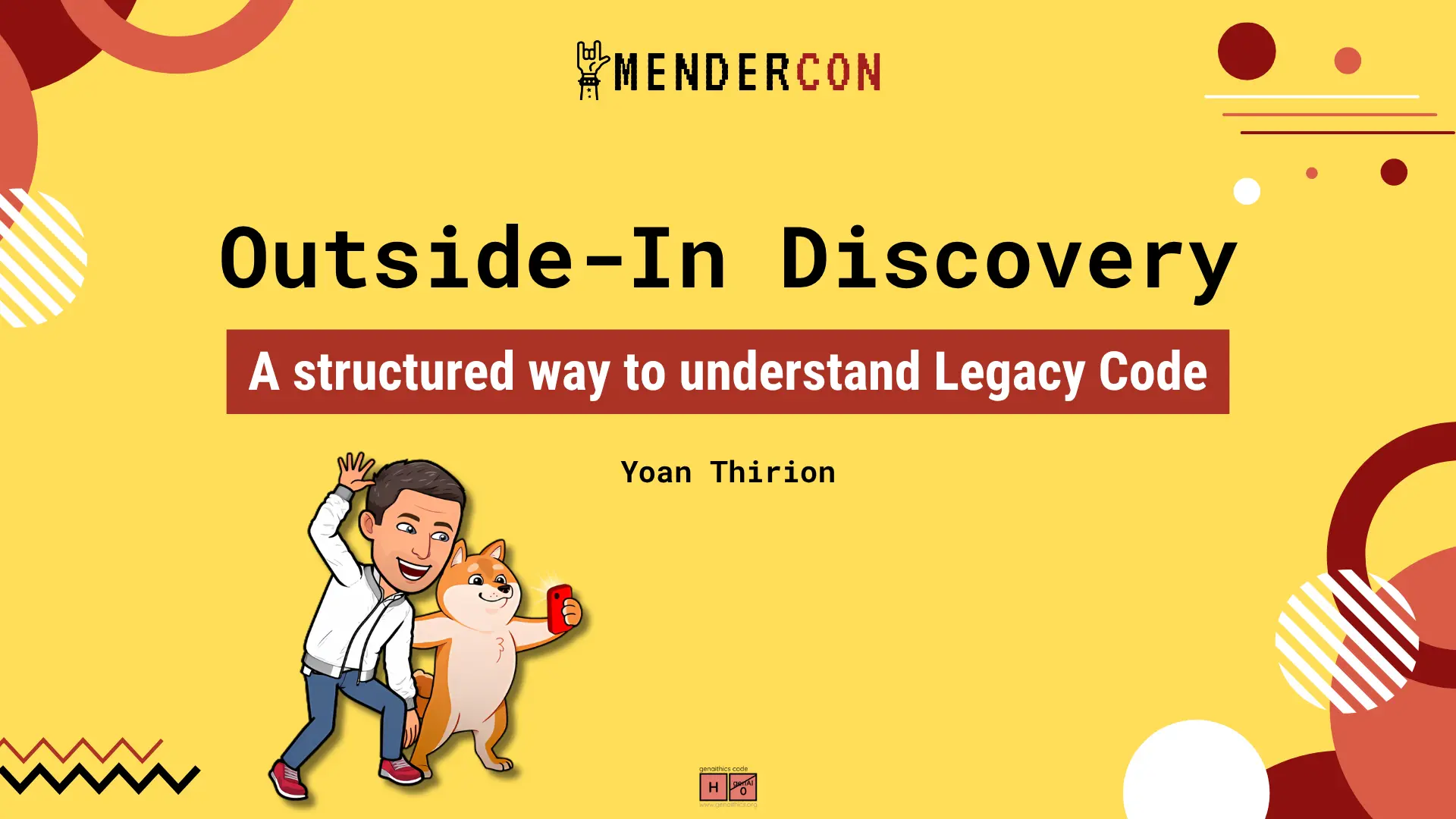
I have explained the concepts behind this approach during a talk at Mendercon 2026: