
Roost — Escritório 3D para Claude Code Agents
sorryhumans/roost
Veja seus agents trabalhando em um escritório 3D animado em tempo real
Ver no GitHubDashboard visual em tempo real que renderiza seus Claude Code agents como personagens em um escritório 3D interativo. Agents em trabalho digitam em suas mesas (com monitor mostrando atividade ao vivo), agents ociosos conversam no sofá, e aqueles offline saem do escritório. Leitura pura e local-first, zero controle remoto.
Instalação
npx convez-ai sorryhumans/roost1 comando no terminal: detecta o formato do repositório (marketplace ou plugin avulso) e instala via Claude Code. Requer Node 18+ e o Claude Code instalado.
Métricas
Casos de uso
- Monitorar múltiplos agents Claude Code executando em paralelo
- Visualizar o progresso e status de tarefas de forma intuitiva
- Debugar comportamentos de agents através de representação visual
Veredito

Roost é um conceito criativo e bem-executado que transforma monitoramento técnico em visualização imersiva. Funciona como dashboard de produtividade puro (não interfere), rodando local-first com Node.js 22+ — ideal para quem orquestra múltiplos agents e valoriza observabilidade em tempo real com experiência UX diferenciada.
README
A tradução para o português deste README ainda está na fila.
Roost — a live 3D office for your Claude Code agents
Your AI agents, working in a little office you can actually watch.
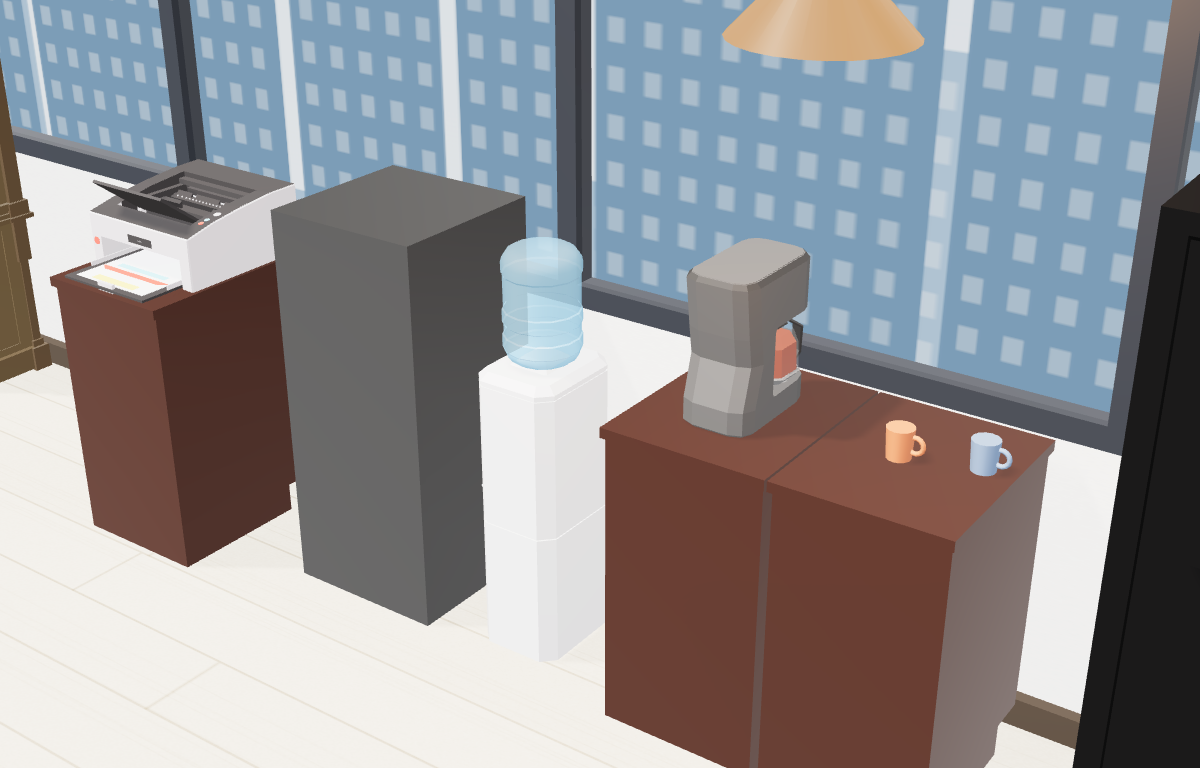
Roost reads the activity of up to four Claude Code agents running on your machine and renders them as characters in a real-time 3D office: whoever is working sits at their desk and types (their monitor shows what they're doing right now), idle agents get up, grab water, and wait on the couch — and when two of them are free, they sit together and chat. Agents that go offline walk out of the office. The boss patrols.
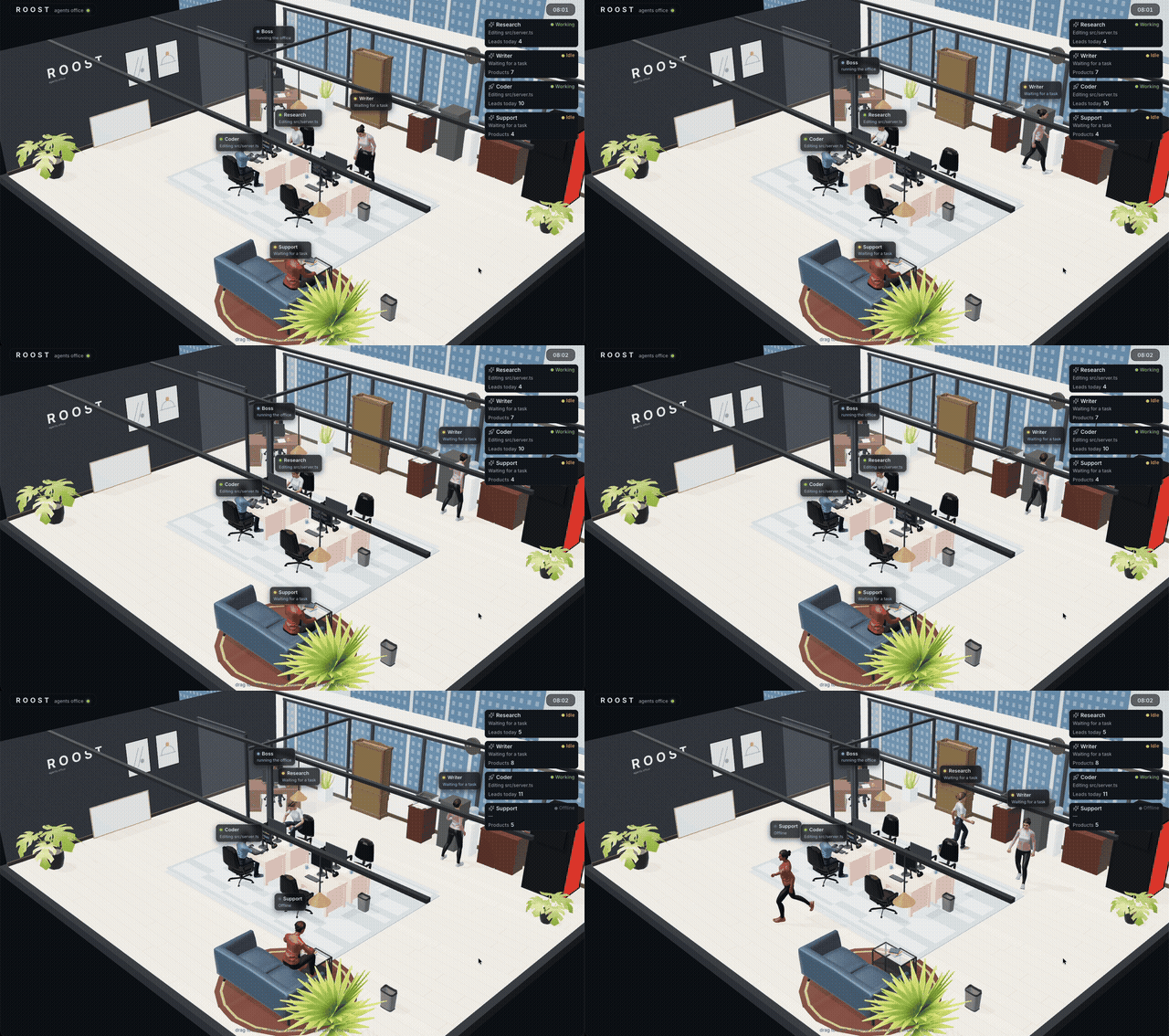
It is a read-only dashboard: Roost watches transcript files and (optionally) tmux — it can never send input to, stop, or otherwise control an agent.
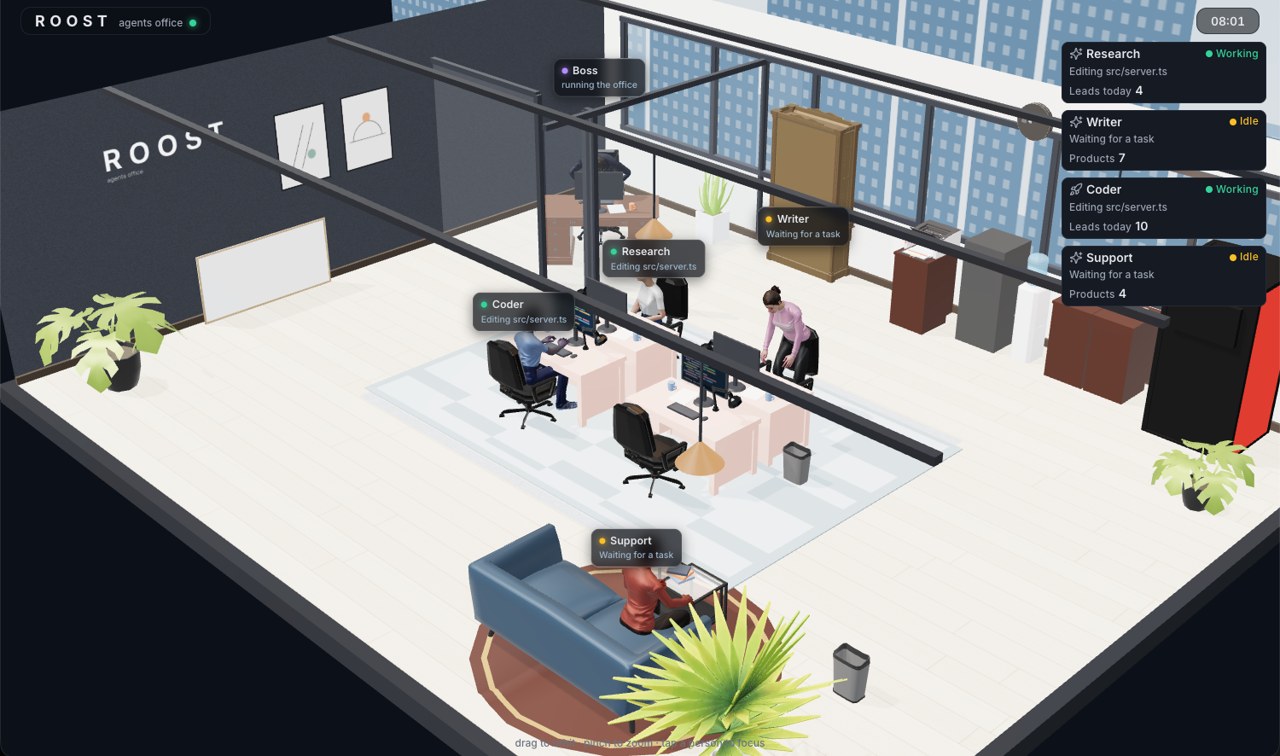
What the characters do
| Agent status | In the office |
|---|---|
working (transcript active in the last ~25s) | sits at their desk and types; the monitor glows with their live activity label |
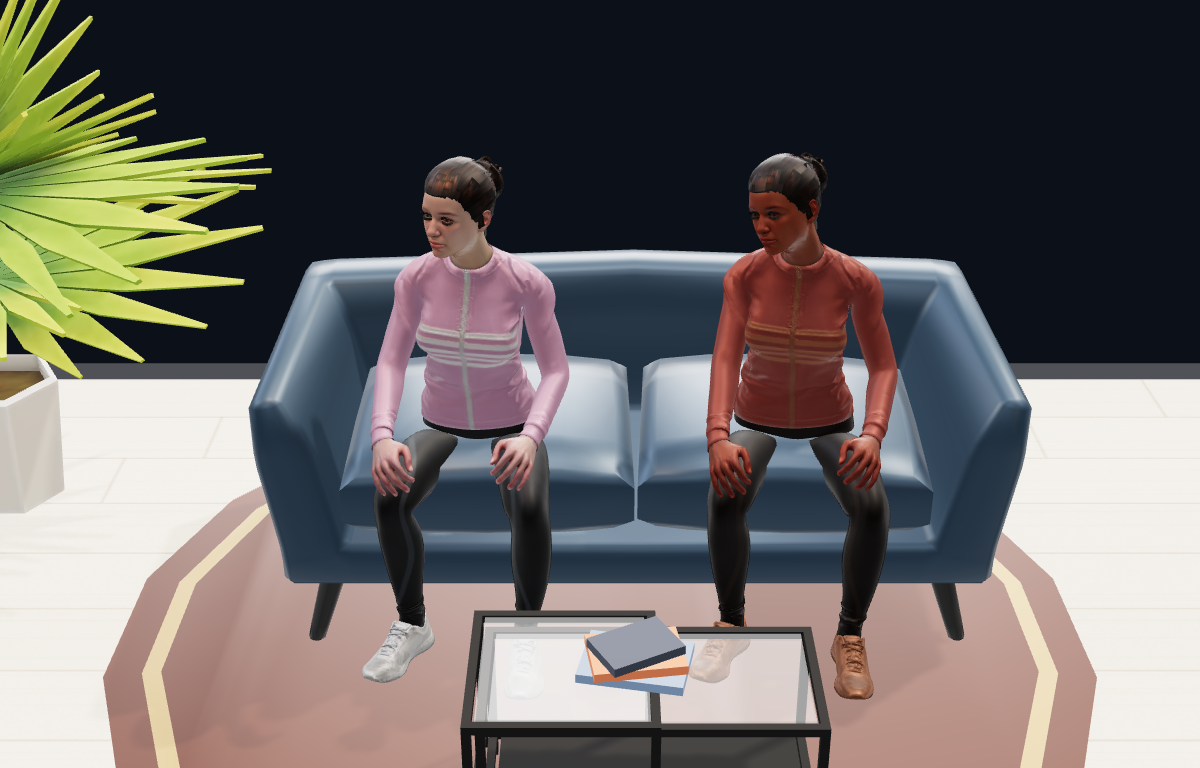
online-idle (alive, no current task) | stands up, walks to the water cooler (paper cup included), looks out the window, then settles on the couch to wait — joining a colleague already there for a chat |
offline | walks out of the office and fades; walks back in when they return |
unknown (source unreadable) | desk stays empty, the HUD card says so |
Plus a boss who types in the glass corner office, takes phone calls by the window, presents at the whiteboard, and walks the floor checking only on agents who are actually working.
 |  |
Quick start
You need Node.js 22+ and at least one project where you run Claude Code.
git clone https://github.com/sorryhumans/roost.git
cd roost
npm run setup                 # installs server + web dependencies
cp roost.config.example.json roost.config.json
$EDITOR roost.config.json     # describe your agents (see below)
npm run build                 # builds the 3D frontend
npm start                     # http://127.0.0.1:7600
Open http://127.0.0.1:7600. To watch from your phone on the same network:
HOST=0.0.0.0 npm start and open http://<your-machine-ip>:7600.
There's also a no-setup preview with scripted agents: append ?demo=1 to the URL.
Configuration
roost.config.json lists 1–4 agents (one per desk):
{
  "agents": [
    {
      "id": "writer",
      "name": "Writer",
      "project": "/home/you/projects/blog-agent",
      "tmux": { "session": "agents", "window": "writer" },
      "metric": { "type": "fileCount", "dir": "/home/you/projects/blog-agent/posts", "label": "Posts" }
    },
    { "id": "coder", "name": "Coder", "project": "/home/you/projects/api" }
  ]
}
| Field | Required | Meaning |
|---|---|---|
id | yes | short unique id (letters/digits/dashes) |
name | yes | display name on the label + HUD card |
project | yes | absolute path of the directory the agent's Claude Code session runs in — Roost finds its transcripts under ~/.claude/projects automatically |
tmux | no | if the agent lives in a tmux window, Roost uses window presence to tell idle from offline precisely |
metric | no | the headline number on the agent's card: lastActive (default) or fileCount of a directory (e.g. produced artifacts) |
Without tmux, Roost infers presence from transcript recency (active within
30 minutes = idle, older = offline).
How it works
- Server (Node + Fastify): a collector loop reads each agent's newest
Claude Code transcript (
~/.claude/projects/.../*.jsonl), converts events to short labels ("Running a command", "Editing a file", …), and streams the normalized state over Server-Sent Events. ~2.5s tick. - Web (Vite + React + three.js): a hand-built 3D office — characters are realistic Mixamo-rig humans with retargeted animation clips (typing, walking, drinking, sitting, phone calls), driven by a small behavior state machine with waypoint pathfinding. Orbit/zoom with mouse or touch; tap a character to focus.
- Live monitor screens are canvas textures redrawn on every status push, a day/night cycle follows your local time (the city outside lights up at night), and there's a perf watchdog that degrades quality on weak GPUs. No WebGL at all? You get a plain card grid.
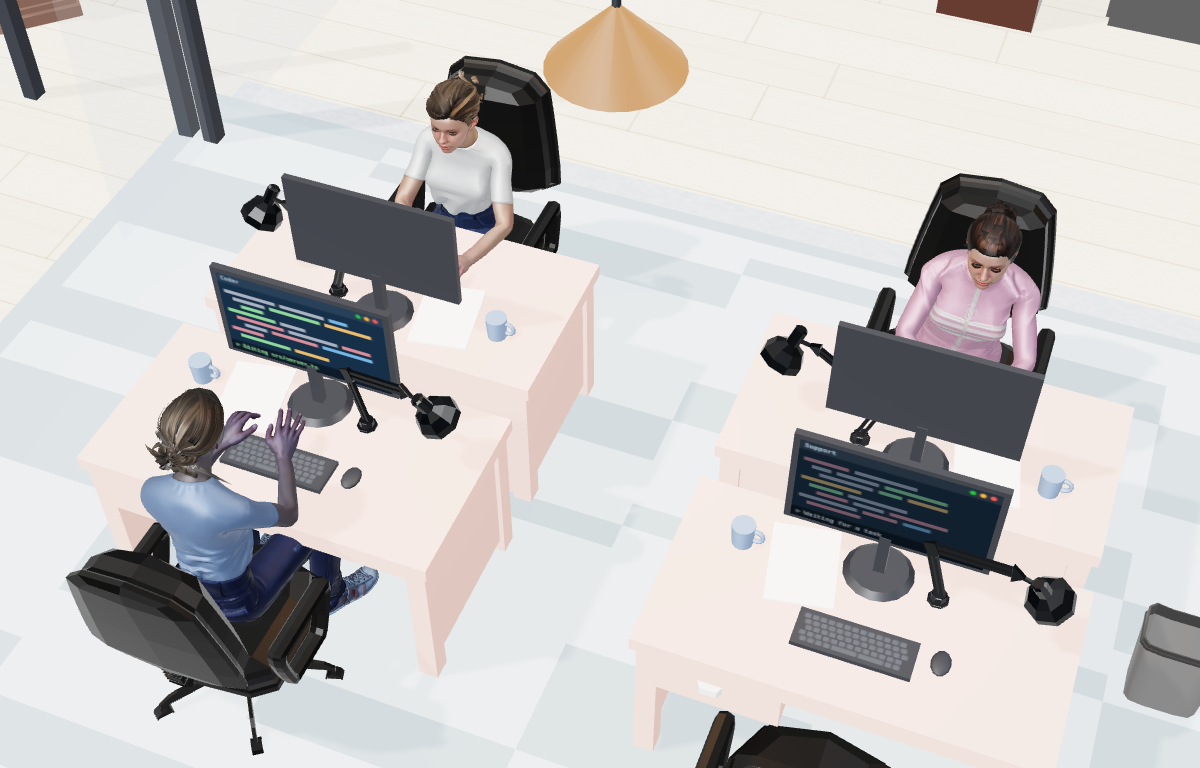
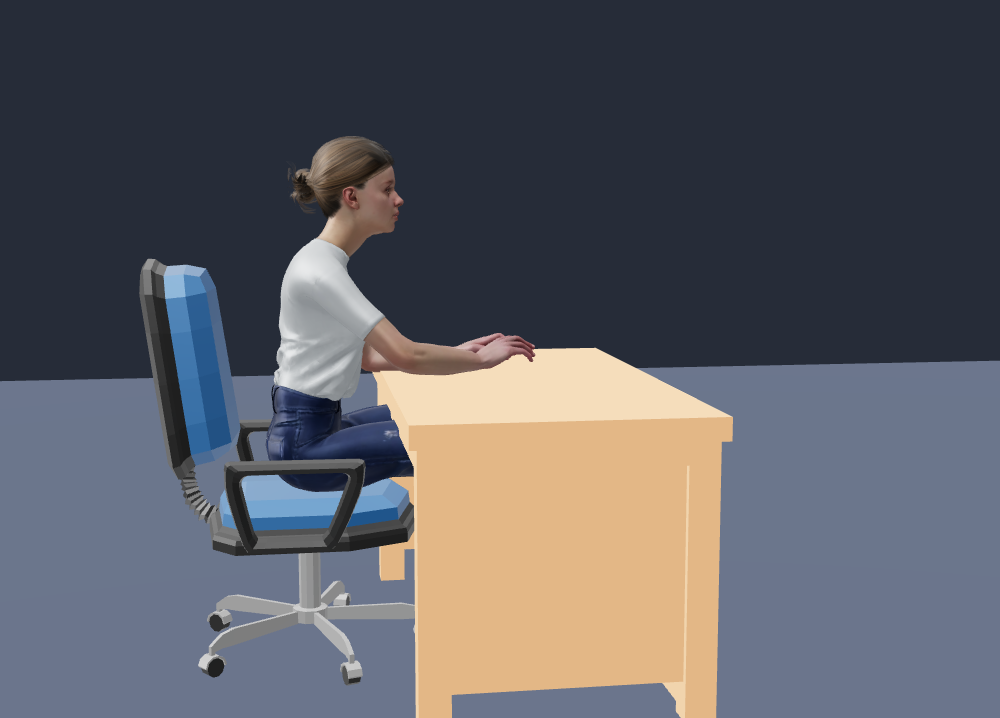
Seating is calibrated against the actual animation skeleton, so hands land on the keyboards, not through the desks:
Privacy & safety
- Read-only by construction. The server registers GET routes only; the UI has zero command affordances (enforced by a structural test). Roost can render your agents — it cannot touch them.
- Labels, never content. Raw transcript text never leaves the server: events become short labels, and everything is passed through a redactor that scrubs token- and phone-shaped strings before serialization.
- Local-first. Binds to
127.0.0.1by default; opt into your LAN withHOST=0.0.0.0. No telemetry, no external calls.
Limitations
- Up to 4 agents (the office has four desks). Extra config entries are rejected.
- The office is a fixed layout; agents are assigned to desks in config order.
- Tested on macOS + Chrome/Safari (including iPhone). WebGPU not required.
Development
npm test                      # server (vitest) + web (vitest) suites
npm --prefix web run dev      # Vite dev server (expects the API on :7600)
The placement audit runs on every load and prints [roost-audit] findings to the
browser console if any furniture overlaps or pokes through a wall. QA helpers:
?demo=1 scripted agents, ?style=b light palette, ?cam=px,py,pz,tx,ty,tz
camera override, ?poi=cooler|couch|window biases idle agents for screenshots.
Credits & license
Code is MIT. Characters and animation clips are Adobe Mixamo
content (royalty-free for use in applications; do not extract and redistribute
them as standalone assets). Furniture models are CC0/CC-BY low-poly models from
poly.pizza authors — full per-file attribution in
CREDITS.md and web/public/models/office/manifest.json.
Made for watching your agents work, because it's weirdly calming.