
Filestash
mickael-kerjean/filestash
Gerenciador de arquivos universal com arquitetura de plugins
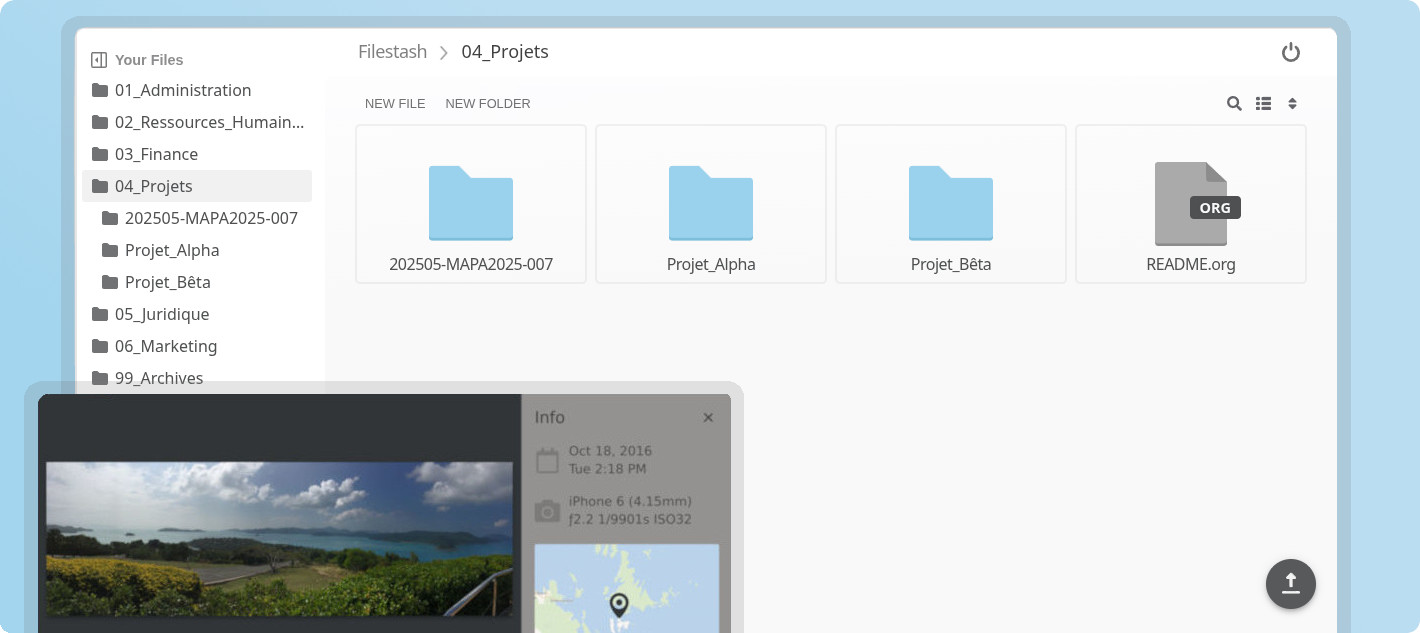
Ver no GitHubPlataforma de gerenciamento de arquivos agnóstica a armazenamento que funciona com FTP, SFTP, S3, SMB, WebDAV, IPFS e 20+ protocolos. Oferece arquitetura dirigida por plugins onde tudo que não é verdade fundamental é extensível, permitindo acesso universal aos dados via interface web, APIs e gateways (SFTP, S3, WebDAV, MCP).
Instalação
npx convez-ai mickael-kerjean/filestash1 comando no terminal: detecta o formato do repositório (marketplace ou plugin avulso) e instala via Claude Code. Requer Node 18+ e o Claude Code instalado.
Métricas
Casos de uso
- Integrar múltiplos backends de armazenamento (cloud, on-premise, P2P) em interface única
- Automatizar workflows de transferência e processamento de arquivos com engine de eventos
- Expor dados heterogêneos via protocolos padronizados (S3, SFTP, WebDAV)
- Construir soluções customizadas de gestão de dados sem overhead
Veredito

Ferramenta sólida de abstração de armazenamento com arquitetura de plugins bem pensada. Ideal para cenários corporativos complexos que exigem suporte a múltiplos backends e automação, mas requer expertise em configuração e desenvolvimento para aproveitar plenamente sua extensibilidade.
README
A tradução para o português deste README ainda está na fila.
What is this?
Key Features
Getting Started
To install Filestash, head to the Getting started guide. If you want to leverage plugins, head over to the inventory, or learn about developing your own plugins.
If you want guidance and expert help on your file management problem, book a call and let's figure out if Filestash is the right platform for you.
Vision & Philosophy
Our goal is simple: to build the best file management platform ever made. Period. But "best" means different things to different people, so we made everything pluggable. The core defines interfaces, plugins implement them. Disagree with our implementation? Write your own. Anything that isn't a fundamental truth of the universe and might spark a debate belongs in a plugin. Literally every piece listed in the key features is a plugin you can swap for another implementation or remove entirely.
Say you want to give your users a Dropbox like experience on top of your existing FTP server (remember the FTP guy during the Dropbox launch on HN?). All the FTP plugin does is implement this interface:
type IBackend interface {
	Ls(path string) ([]os.FileInfo, error)           // list files in a folder
	Stat(path string) (os.FileInfo, error)           // file stat
	Cat(path string) (io.ReadCloser, error)          // download a file
	Mkdir(path string) error                         // create a folder
	Rm(path string) error                            // remove something
	Mv(from string, to string) error                 // rename something
	Save(path string, file io.Reader) error          // save a file
	Touch(path string) error                         // create a file

	// I have omitted 2 other methods, a first one to enable connections reuse and
	// another one to declare what should the login form be like.
}
There are interfaces you can implement for every key component of Filestash: from storage, to authentication, authorisation, custom apps, search, thumbnailing, frontend patches, middleware, endpoint creation and a few others documented in the plugin development guide.
To see what's currently installed in your instance, head over to /about. The inventory of plugins is documented here
Support
- Commercial Users → support contract
- For individuals:
- #filestash on IRC (libera.chat)
- Bitcoin:
3LX5KGmSmHDj5EuXrmUvcg77EJxCxmdsgW - Open Collective
Credits
Filestash stands on the shoulder of: contributors, folks developing awesome libraries, a whole bunch of C stuff (the C standard library, libjpeg, libpng, libgif, libraw and many more), fontawesome, material, Browser stack to let us test on real devices, and the many guys from Nebraska and elsewhere who have been thanklessly maintaining the critical pieces that Filestash sits on top: