
MelonS-Agents
MelonS/MelonS-Agents
Agent que cria, testa e itera seu próprio game com media skills de vídeo e job-board
Ver no GitHubSistema autônomo que constrói, joga e verifica seu próprio game (simulador de colônia) com testes de entrada em 15 cenários e validação por rubrica isolada. Inclui skills de produção: geração de videoclipes musicais (shorts 9:16 sincronizados ao beat) e resumo de vagas de emprego coreanas. Compatível com agentskills.io e portável entre Claude Code, Cursor e outros IDEs com IA.
Instalação
npx convez-ai MelonS/MelonS-Agents1 comando no terminal: detecta o formato do repositório (marketplace ou plugin avulso) e instala via Claude Code. Requer Node 18+ e o Claude Code instalado.
Métricas
Casos de uso
- Prototipagem autônoma de games com loop de verificação integrado
- Geração de vídeos musicais curtos sincronizados a estrutura de áudio
- Processamento e expansão de buscas de emprego com sinônimos de roles
Veredito

Projeto ambicioso de agent capaz de autoverificação e iteração contínua, mas com curva de aprendizado acentuada. Excelente para explorar limites de autonomia em IA; requer compreensão profunda de arquitetura de agents e pipelines de verificação.
README
A tradução para o português deste README ainda está na fila.
MelonS-Agents
한국어 | English · Live site →
An agent that builds, plays, and verifies its own game — a colony-sim vertical slice gated by input-level repro tests and isolated-grader rubric verdicts — plus two production media skills (music-video shorts, Korean job-board digest), all agentskills.io-spec compliant and portable across Claude Code, Cursor, Goose, Gemini CLI, OpenAI Codex, GitHub Copilot.
Local for the mechanical, Claude for the creative. Phrase-aware ffmpeg shaders sync vintage visuals to music structure. Short-keyword job-hunt expansion via role-synonym map. Three trigger layers — commit, anomaly, schedule — so the system corrects its own drift. English + Korean dual track from day 1.
100+ mission outputs · 5 mission types · 2 portable skills + 1 meta-skill + 2 game prototypes · 23 ffmpeg shaders · 15-scenario input-level commit gate · isolated-grader verification loop · 0 runtime API tokens · 3 audit layers · MIT


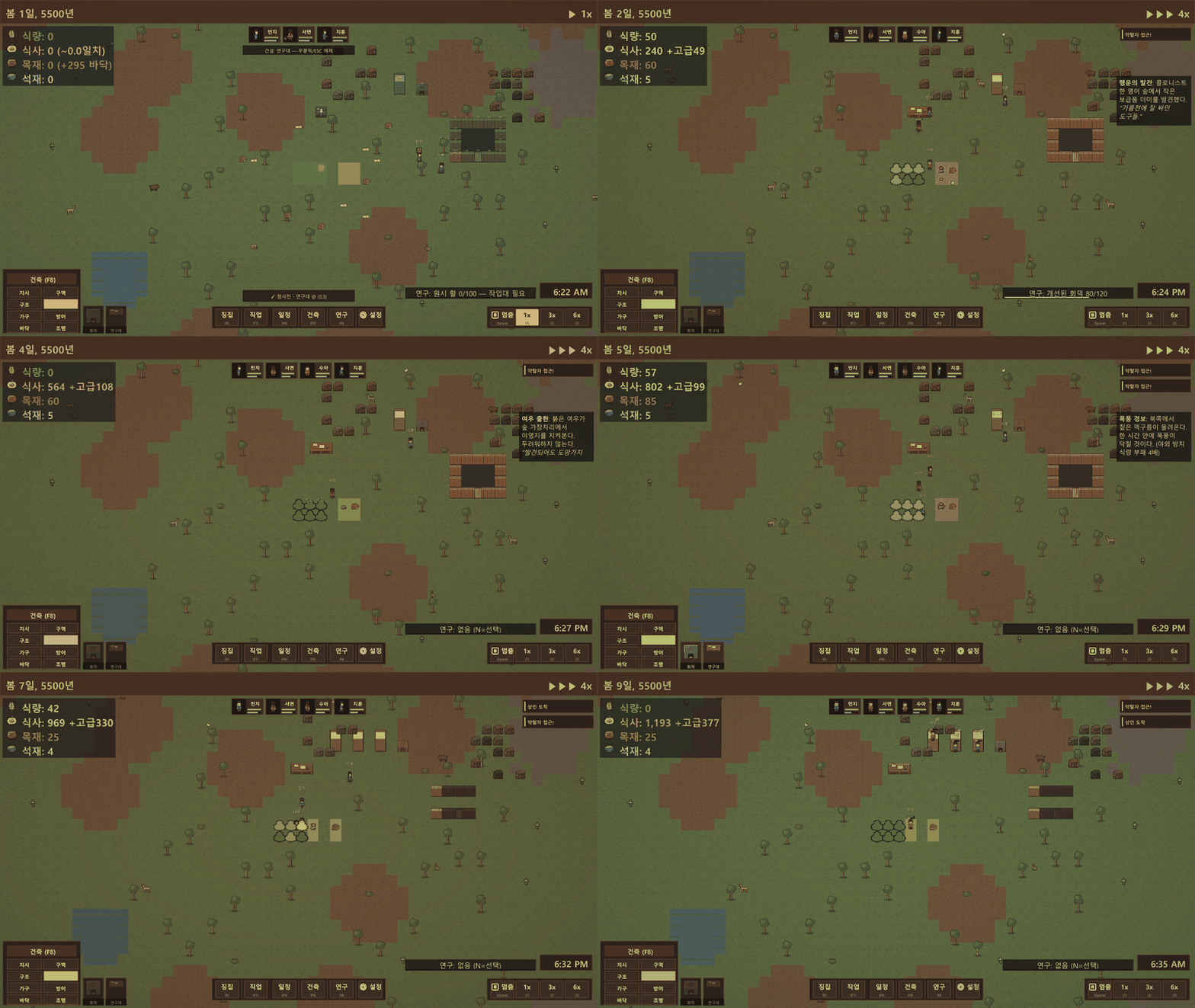
Unattended 16-day colony soak, agent-built and agent-verified — see PawnSim.
Try it in ~60 seconds (zero accounts, zero .env)
git clone --depth 1 https://github.com/MelonS/MelonS-Agents.git
cd MelonS-Agents
./scripts/first-touch.sh        # single-command guided demo wizard
The wizard checks prerequisites, fetches the demo cache (~30 s),
renders a 60-second 9:16 short from bundled CC-BY Blender clips +
Kevin MacLeod music (~100 s), and opens the result. No Pexels signup,
no Suno round-trip, no .env edit. See
Quick start for the manual + advanced paths.
Who this is for
- You want short-form vertical video output without writing pipeline code. Give the wizard a music file, get back a 9:16 short with beat-aligned cuts and vintage shaders. No Premiere, no After Effects, no GUI.
- You want to study a working multi-agent system that doesn't pretend
to be magic. Every commit on this repo is one observable step in
how the system evolves;
docs/audit/records every drift the auditor catches;docs/metrics/quality-trend.png+intervention.pngchart whether the autonomy and quality claims are honest over time. - You want a Korean job-board digest that respects how you actually
search. Pass
--seed "Problem Solver"; the skill expands to the 24 equivalent titles companies use (FDE / Applied AI Engineer / Generalist / Founding Engineer / …) before fetching from 11 sources. - You want to see an agent verify the game it builds — not just build it. PawnSim ships with a 15-scenario input-level repro gate on every commit and an isolated-grader rubric loop for long soaks; the graders' verdicts (not the author's claims) are the acceptance record, committed alongside the fixes.
- You want an agentskills.io-compliant Skill you can drop into other runtimes. Both skills work in Claude Code, Cursor, Goose, Gemini CLI, OpenAI Codex, and the other ~38 listed compatible runtimes.
If you want a SaaS that hides the pipeline, this isn't it. If you want every step of the pipeline as inspectable bash + open-source local tools (ffmpeg / whisper.cpp / ollama / aubio), it is.
Overview
A multi-agent system driven by Claude Code — media pipeline primary on macOS, game-prototype track primary on Windows (Unity), Linux best-effort. Latest tag is v0.4.0. Two production skills ship today; both are agentskills.io-spec compliant so they drop into Claude Code, Cursor, Goose, Gemini CLI, and the rest of the compatible-runtime set unmodified.
Skill #1 —
music-video. Music file in, 60-second 9:16 vertical short out. Per-genre color grade (six profiles) shapes generic Pexels B-roll into a genre-coded look; 23 ffmpeg shaders
- phrase-aware structure (cuts on
aubiotrackbeats, glitch micro-edits onaubioonsetdrum hits, restraint gated per preset) compose on top. The Sample-output section below shows a noir-detective render; the genre grid further down shows six grade profiles side by side. Implementation underagents/missions/music-video/run.sh— the skill routes through the 5-agent mission pipeline (orchestrator- planner / resourcer / editor / qa) so re-rendering tuning flows into both surfaces.
Skill #2 —
job-hunt. Single seed keyword in, deduplicated markdown digest out.--seed "Problem Solver"expands to the 24-synonym role family companies actually use (FDE / Applied AI Engineer / Generalist / Founding Engineer / Forward Deployed / …) before fetching from 11 source plugins. Five are live-ready without an API key —global-ats(Greenhouse + Ashby + Lever boards across ~27 AI / SaaS companies including Anthropic / OpenAI / Cursor / Stripe / Notion / Datadog),global-remoteok,global-remotive,global-hn-whoshiring(HN monthly via Algolia),kr-worknet(정부 공공고용서비스). Two more (kr-wanted,kr-saramin) need an API key per source. End-to-end live test: 5,000+ raw postings filtered to ~200 matches. The skill is standalone (no orchestrator routing) —skills/job-hunt/scripts/run.shis the canonical implementation because every planner / qa stage would be near-empty for a mechanical filter / fetch / dedupe pipeline.Skill #3 —
game-dev-agent(in development, not in the production count above). Unity-focused AI agent that orchestrates sprite generation, C# scaffolding, balance tuning, audio generation, and an in-game AI director — the meta-skill that drives the game prototypes built alongside it. Two prototype skills serve as its empirical validation surface. The flagship is PawnSim, a lightweight colony-sim vertical slice (skills/game-prototype/) that has grown across many autonomous multi-agent sessions into a deep slice — grid A* pathfinding, pawns with needs/health/skills/traits, drafted + ranged combat, research, build/deconstruct/designations, farming, hauling, director modes, sound, day/night, save/load. Every commit passes two gates: the 6-stagerefactor_checkbuild harness and, since 2026-06-12, a 15-scenario input-level repro gate (synthesized clicks through the player's own UI path, with effect assertions), with long soaks graded by an isolated grader sub-agent against a written rubric — see the PawnSim section below for what that loop has caught. The second prototype is a 2D physics-merge puzzle (skills/game-prototype-suika/, Day 2 shipped at ~15× wall-clock speedup vs the no-framework baseline). Graduates into the production-skill count once both prototypes hit their deliverable schedules. Skill definitions live inskills/game-dev-agent/; PawnSim's own README + PM milestones atskills/game-prototype/README.md.Two ways to drive this repo.
- Agent-driven (primary) — install Claude Code, point it at the cloned repo, type a mission. Claude Code edits files, commits, pushes. Cost: a Max subscription absorbs orchestration; the money firewall gates anything paid beyond that.
- Script-only (fallback) —
./scripts/bootstrap.shthen the bash scripts run standalone. No Claude Code needed; no commits or pushes happen automatically, but the rendered output is identical. Cost: $0 beyond the optional free Pexels API key.The scaffold is general-purpose. Short-form video is the v1 domain because the deliverable is visually verifiable and failure modes are fast to catch; the architecture itself doesn't assume short-form anything. New skills pick the shape that fits — see the Architecture section below for the three-shape model and what a future skill (movie / game / longform) would likely route through.
Built on a single premise: automate the production pipeline, then let the system evolve its own logic. Every commit is one observable step of that evolution. The history is the agent system's own growth, not a record of its outputs (those stay local in gitignored
records/).
PawnSim — the prototype the agent is actively iterating on (2026-06 focus)
The most active validation surface right now is PawnSim (Skill #3-A) — the agent builds and play-tests it in a tight loop, with the operator filing in-game feedback that turns straight into the next batch of fixes.
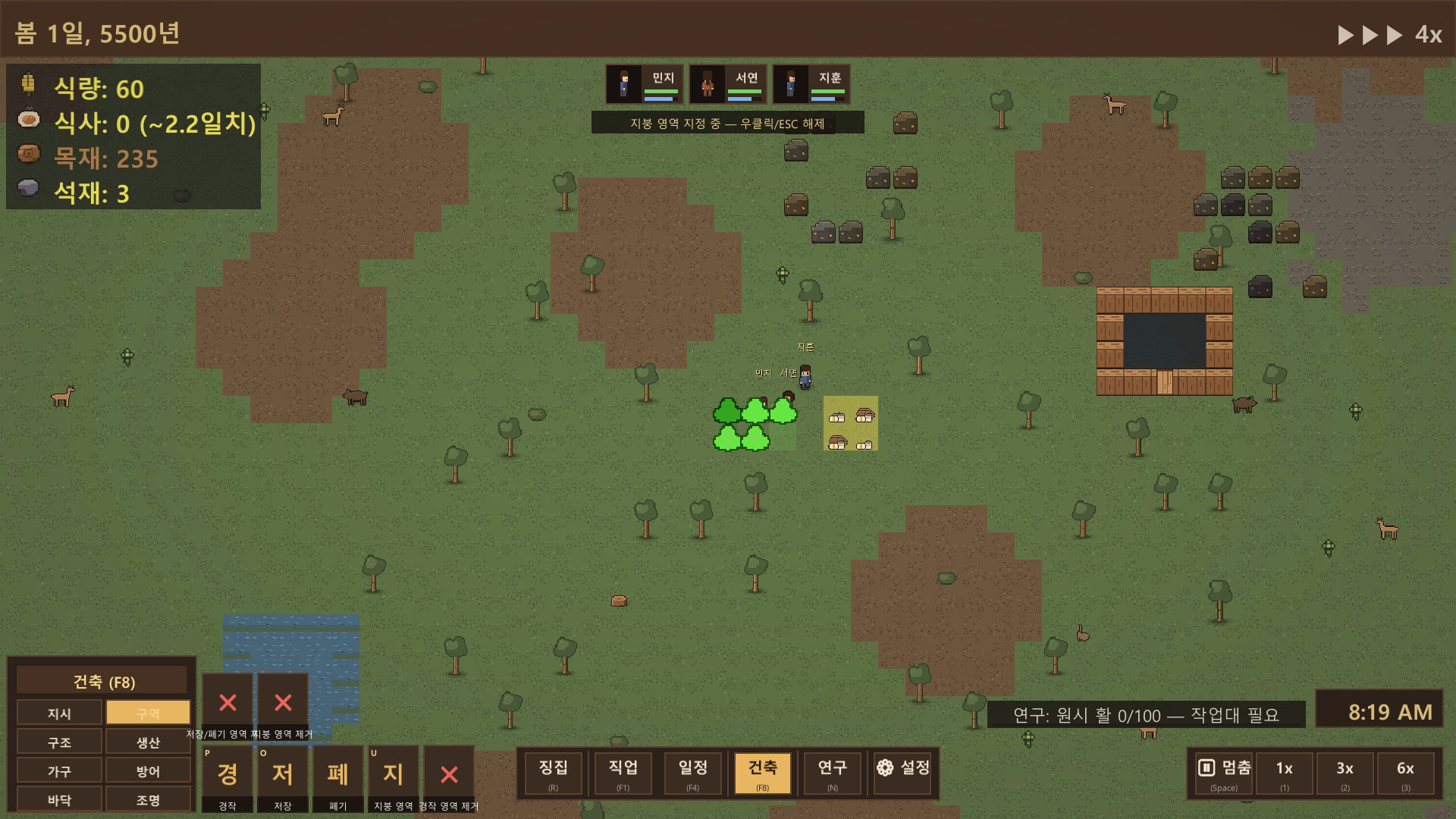
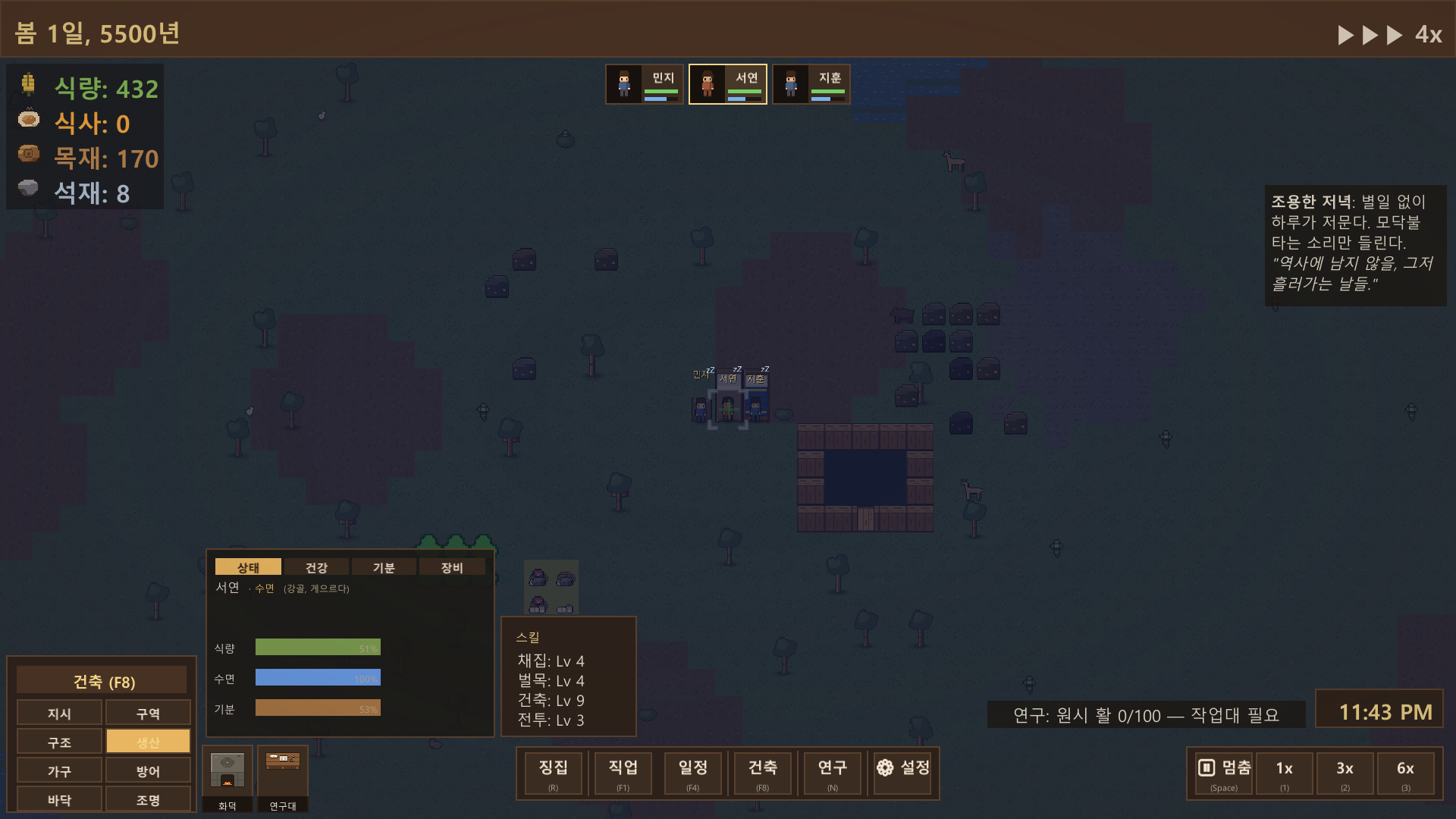
Colonists autonomously chop / mine / gather / farm / cook / haul / build /
research / fight under a utility AI; an AI Director schedules threats on a
jittered clock; the player drafts pawns and paints build + designation
orders. Every sprite (a full 32px art generation: 3-direction walk/work
pawn sheets, animals, terrain, furniture — all procedurally generated),
every scene, and every C# system is CLI-scaffolded by
game-dev-agent with no manual Unity Editor work.
Verification is the headline feature (2026-06-12). Every commit passes a
15-scenario input-level repro gate (real synthesized clicks through the same
UI path a player uses, with effect assertions — "the click placed a
designation" — not just "the click landed"). Long-running soaks are graded
by an isolated grader sub-agent against a written rubric (Ralph-loop
pattern): the grader sees only evidence (screenshots + raw logs), never the
author's intent, and its verdicts repeatedly caught what self-review missed —
a silent harness blind spot that had voided every designation in earlier
soaks, a "food-rich colony starving to death" mood-gate trap, and a
permanent-mental-break colony freeze. The basic colony loop (stockpile →
housing with real indoor effects → permanent farm plots → logging → mining →
deconstruct) is now machine-verified end-to-end, with the rubric verdicts
committed alongside the fixes. Full feature breakdown + honest
verification status (including known gaps) in
skills/game-prototype/README.md.
Engineering decisions, one page.
docs/engineering-case-studies.md— nine production incidents and the minimum mechanism each one produced (Tier-1 routing, semaphore-bounded batch, content-quality feedback loop, three-layer reactive audit, shader-effects-in-ffmpeg / knowing-where-the-wall-is, onboarding-friction-kills-first-touch / zero-account demo path, declarative preset routing for genre-aware shaders, intervention-as-the-unmeasured-axis / autonomy signal + reduction levers, and the quality-bar-as-6-unenforced-contracts after the 2026-05-22 music-video QA pass). Each entry follows problem → constraint → decision → artifact.
Design notes
A few choices that distinguish this from a typical agent demo:
- Outcome layer vs. work queue, kept separate.
docs/goal.mdholds the active goal as a concrete deliverable;docs/roadmap.mdholds the day-level work queue. An empty queue does not mean the goal is achieved — only the goal's "Done when" criteria do. The split exists because an earlier 24-hour stretch produced 11 infra commits with the queue reading 0 open items and 0 actual outputs. - Operator contract as canonical, committed source of truth.
Split across two files on 2026-05-22 for portability:
docs/operator-contract.mdholds this project's 12 hard rules + project-specific conventions (this repo's README structure, README maintenance cadence).config/claude-global.template.mdholds the operator-style preferences that travel across projects (dual-stack reporting, terminal format, batch execution, writing tone, idle-state signaling, scrum-master footer); the install script renders it idempotently into~/.claude/CLAUDE.mdbetween BEGIN/END markers. The agent's local memory is a fast-access cache that links back to whichever file holds each rule's canonical text; if the two disagree, the file wins and the memory entry is corrected. - Cost firewall between orchestration and execution. Anthropic API
tokens are spent only during orchestration (Tier 1). Mission execution
(transcribe → select → render → QA) runs entirely on local tools —
whisper.cpp+ollama+ffmpeg— and costs zero tokens. Seedocs/cost-model.md. - Out-of-band auditor with an active alert surface. The
auditorsubagent runs daily at 03:00 vialaunchd, walks the whole repo read-only, and writes to a stable channel:docs/audit/CURRENT-ALERT.mdexists iff the latest verdict is non-CLEAN; the next interactive session is contractually obligated to read it before picking up the goal. - File-based subagent handoff. Subagents do not share conversation
history. They communicate through committed files (
plan.md/MANIFEST.md/qa-report.md). Each subagent's context is bounded by its prompt + the manifest it reads — predictable token cost, predictable failure modes. - Operator tooling. Scripts that surface system state and
absorb routine status-check prompts so the operator doesn't have
to type them.
scripts/doctor.shis a Claude-free ~2-second health check — CLI tools, env keys, schedulers, audit alerts, git state, disk, per-skill activation, skill manifest drift;--jsonoutput includes anactionable_warnfield that excludes opt-in env keys + git-tree so the signal isn't noisy.scripts/audit-skill-drift.shis the 13th audit rule, verifying each skill's declared LIVE-flag manifest matches its scripts' gating.scripts/statusline.shis the Claude Code statusline — it reads doctor's JSON cache (60s background regen) and the goal-lock skill to renderdoctor:⚠N · goal:N/M · audit⚠continuously, so "what's the state?" gets answered without typing.scripts/log-decision.shappends a one-line entry todocs/autonomous-decisions.md— the agent records unilateral decisions during overnight work so the operator scans one page in the morning instead of typing "what happened?" prompts.outputs/review-queue/+ three scripts (review-queue-add.sh/-digest.sh/-decide.sh) is the batched taste-decision queue — music-video renders auto-enqueue here instead of pinging the operator per-mp4.scripts/morning-brief.sh— single command that combines all the above into a one-page overnight digest: doctor verdict, audit status, intervention trend (7-day Δ), commits since 12h ago + attribution, today's autonomous decisions, review-queue pending count, blockers. Read-only; the canonical answer to "what happened overnight?". Full catalog with what/when/output table:docs/operator-tooling.md.
Autonomy signal — operator-intervention trend
A multi-agent system that needs constant human steering hasn't
actually escaped the same effort it was meant to replace. This
chart is the honest measurement of that — every commit on main
is classified as user-initiated (operator surfaced the need,
picked an option, approved a deliverable) or agent-autonomous
(audit caught drift, roadmap pull, infra maintenance), and the
operator's local Claude Code session logs are mined for prompt
count and active session minutes.
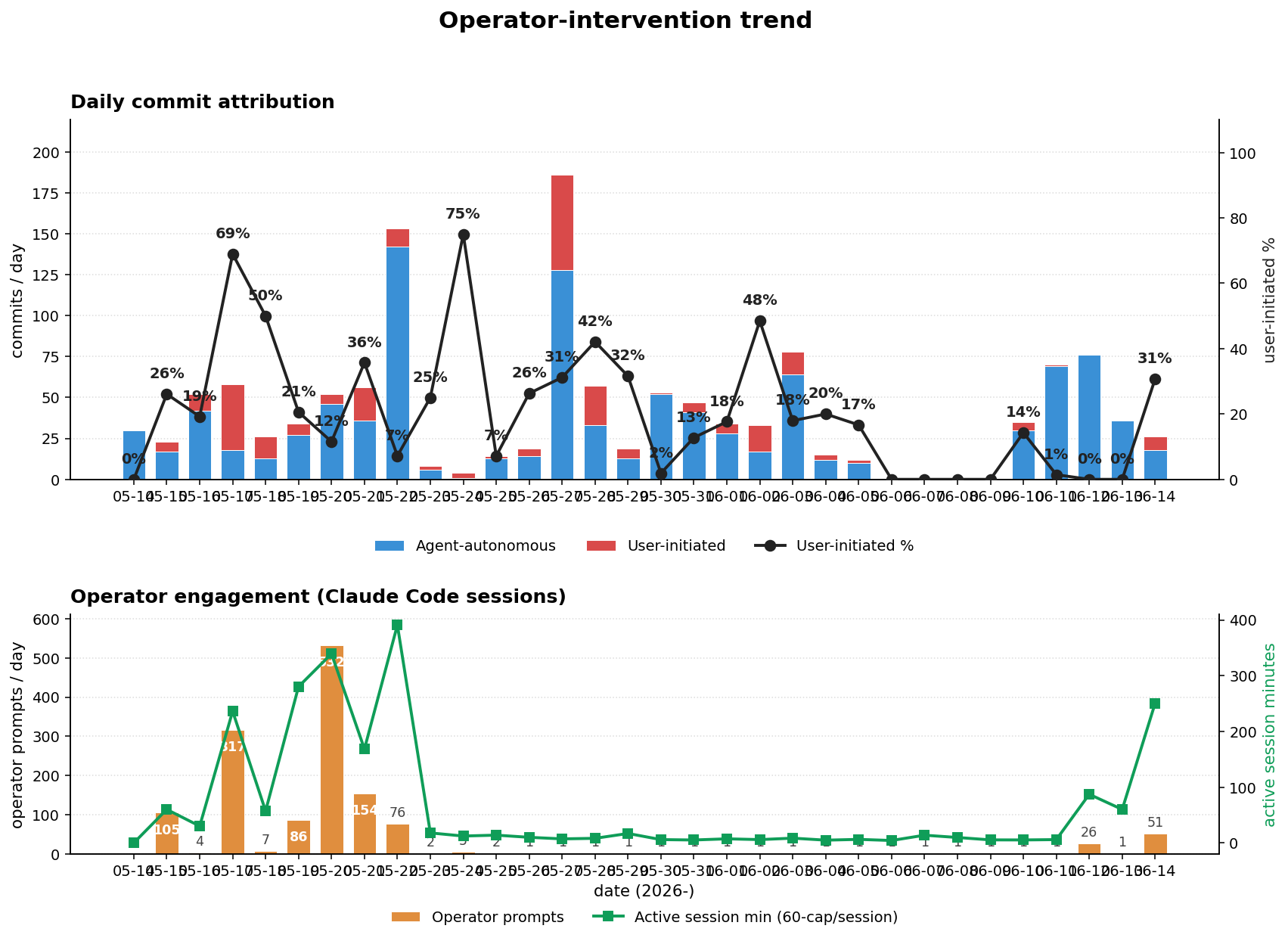
Goal: both panels trend down as the agent system absorbs more
decisions. Rebuilt by
scripts/generate-intervention-chart.py
from git log + the local Claude Code session JSONLs — daily at
02:00 KST via launchd on the macOS workstation, manually during the
current Windows-based game sprint (the script went cross-platform
2026-06-12). The engagement panel only counts sessions stored on
the machine that ran the regeneration, so days worked on another
machine show as gaps, not zero engagement.
Classification heuristics + reduction analysis at
docs/research/2026-05-22-intervention-reduction.md.
Raw per-day data at docs/metrics/intervention.json.
Quality signal — mission-outcome trend
The companion signal to autonomy. Autonomy asks "is operator
involvement going down?"; quality asks "is the pipeline producing
more reliable output over time?". Every
records/missions/<date>/<id>/qa-report.md is parsed for
Verdict: PASS|FAIL and attempt N of M; missions without a
qa-report (the music-video class — no per-mission retry harness) are
counted under "metrics.json only".
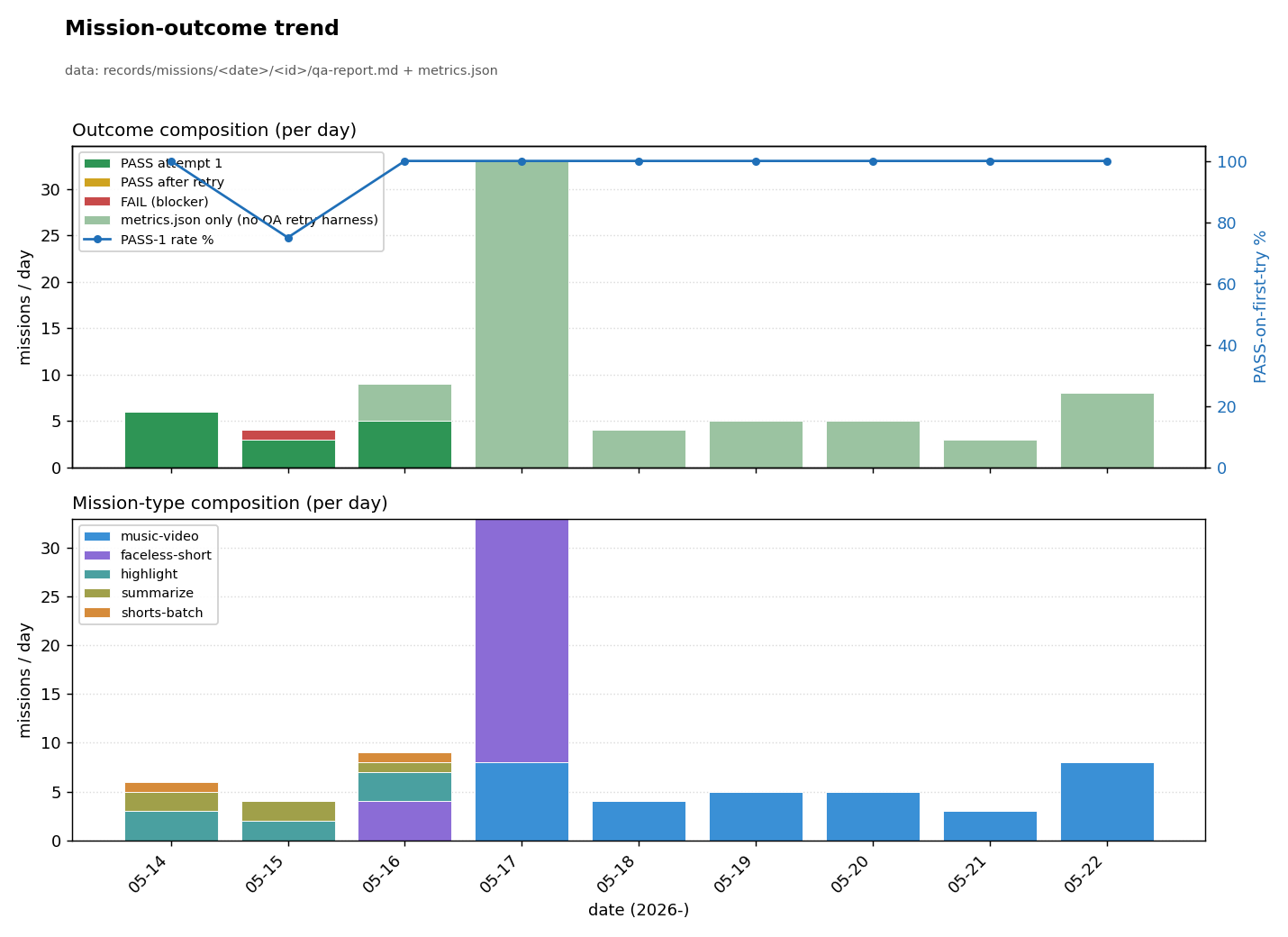
Panel B reads the system's evolution at a glance — the 2026-05-17
peak is the faceless-pilot batch (8 → 33 missions/day); the
post-pivot flat band is the current music-video format running at a
sustainable 3–8 renders/day cadence. Regenerate via
.venv/bin/python scripts/generate-quality-trend-chart.py; raw
per-day data at docs/metrics/quality-trend.json.
Sample output

100+ mission outputs across five mission types. The current
production format is the music-video mission — music-as-primary-audio
shorts (no narration, no captions, beat-aligned cuts, onset-aligned
glitch micro-edits), picked over the earlier narration-driven format
on 2026-05-17
(decision log).
Recently shipped (rolling)
- 2026-06-12 PawnSim verification-loop adoption + basics overhaul
(Skill #3-A) — adopted a rubric + isolated-grader verification loop
(grader sub-agents judging soak evidence with zero author context) and
used it to drive ~40 gated commits in 36 hours: a 32px art generation
swap (pawn walk/work sheets, animals, terrain, walls/doors/ore with
top-down block grammar), camera range calibrated against reference
screenshots, wood-economy parity, permanent farm plots
(sow → harvest → re-sow), real indoor effects (roofed rooms block
storms), randomized raid scheduling, manual-order priority, and a
16-pair UI-overlap audit fixed to zero. The graders' verdicts — not
the author's claims — are the acceptance record, committed per round
in
skills/game-prototype/docs/. - 2026-06-03 PawnSim playtest-fix batch (Skill #3-A) — an operator
play-test loop drove a 12-commit batch on
skills/game-prototype/: fixed a pawn-movement speed regression + chop-approach jitter (P0), wired needs→negative-thought mood so colonists actually get unhappy when hungry/tired/hurt, fixed a designation-dispatch reservation-key bug that made every idle pawn swarm one tree, moved the resource readout to a genre-standard top-left vertical list, rebuilt clustered ore veins + map-wide soil/rock terrain, and repaired the settings panel. Each fix is build- + screenshot/coordinate-verified; seedocs/PLAYTEST-TODO.mdfor the per-item status (kept open until the operator confirms in-game). - 2026-05-23 production batch — 6 mp4s (
monday-v1/v2,convenience-v1/v2,smallhand-folk-v1/v2) underoutputs/publish/shorts-2026-05-23-batch/— the first multi-track batch produced throughscripts/music-video-batch.sh. - Kinetic lyric overlay —
scripts/music-video-lyrics.sh+ whisper-derived LRC viascripts/music-video-lyric-align.sh. Visible on thesmallhand-folkframe in the genre grid below ("가난이 너를 만든 게 / 아니라"). Sub-floor confidence lines mark autofilled; cross-platform safe-band positioning. - Pre-publish gate + thumbnail auto-extract —
scripts/music-video-validate.sh(combined duration / resolution / loudness / shader-anchor coverage / lyric-sync drift, exit 0/1/2)scripts/music-video-thumbnail.sh(mid-climax JPG). Both auto-chain post-render whenMUSIC_VIDEO_VALIDATE=1.
What's shipped on top of the v5 prototype
- 23 ffmpeg shaders in
scripts/music-video-shaders.shacross three stages — pond / halation / breathing / combo (first pass) + light_leak / duotone / vignette_pulse / scanline / chromatic_split / neon_edge / vhs / saturation_pulse / kaleidoscope / beat_burst / strobe / shake / color_burst / light_rays (genre-aware pass) + paper_grain / dust_speck / posterize / trail_echo / soft_bloom (Stage-2 + Stage-3). Cartoon / cel-shading deliberately deferred — see case study 5. - Genre-aware preset routing — 14-genre table in
skills/music-video/data/genre-presets.yamlresolves a genre → preset → env overrides → post-shader chain (case study 7). Ambient / classical / dreamcore route to a separatescripts/music-video-stillzoom.sh(image + music → 60-second slow Ken-Burns) for genres where ANY cut violates the contract. - Per-genre base color grade —
grade_profilefield on every preset (kr_warm_pastel / hollywood_teal_orange / lofi_warm_grain / rnb_low_key / city_pop_neon / neutral) drives an ffmpegcurves+eq+colorbalancestage inscripts/music-video-grade.shbefore shaders. Transforms generic Pexels B-roll into a genre-coded look before the effect layer. Research origin:docs/research/2026-05-22-music-video-pro-practices.md§2; visual A/B verdict indocs/research/2026-05-22-grade-profile-comparison.md. - Director-discipline shot plan (opt-in scaffold) —
scripts/shot-plan.shgenerates a per-segment intent layer from the lyric LRC + phrase boundaries before B-roll fetch, paralleling working music-video director practice (write the shot list before the shoot). Activated viaMUSIC_VIDEO_USE_SHOT_PLAN=1. Methodology research indocs/research/2026-05-22-music-video-director-methodology.md. - Music-video quality bar — five contracts the system now enforces
(case study 9
· full changelog at
skills/music-video/CHANGELOG.md): A.1 B-roll dedup registry (records/youtube/broll-used.txt, 271 seeded ids), A.2 lyric vocal-onset alignment via whisper (scripts/music-video-lyric-align.sh, word-level KR / segment-level EN, LRC + JSON sidecar with drift verdict), A.3 lang_anchor + person-anchored keyword injection at every 3rd segment with a QA gate (scripts/music-video-qa-anchor.sh, exit 0 PASS / 1 WARN / 2 FAIL), B.1 shader-vocabulary expansion to 23 effects across three stages, C.1 four shader-gate modes viaMUSIC_VIDEO_SHADER_GATE(uniform / phrase_climax / onsets / beats) with event-count cap at 30 to dodge ffmpeg's expr-length budget. - Operator-facing utilities —
scripts/first-touch.shwizard (single-command guided zero-account demo),scripts/music-video-batch.sh(multi-track render wrapper),scripts/music-video-validate.sh(combined pre-publish gate),scripts/music-video-thumbnail.sh(auto-extract upload-ready still),scripts/lyric-extract.sh(whisper-based lyric pull),scripts/morning-brief.sh(one-page overnight digest). Full table indocs/music-video-pipeline-reference.md. - Skill #2 —
job-huntv0.4.0 (separate from the music-video thread above) — short-keyword UX + 11 source plugins (5 live-ready no-key, 2 key-gated, 4 mock-fallback / permanent-mock) + 5 enrichment scaffolds. Walkthrough atdocs/skills/job-hunt.md.
The faceless-short mission (narration-driven shorts) remains the
showcase below; the v1 pipeline outputs (single-clip highlight +
shorts-batch) remain as the baseline reference further down.
Music-video pilots (post-pivot, 2026-05-17)
The music-video mission produces a 60-second 9:16 short where the
music IS the message: operator-supplied music track is the sole
audio; cuts land on aubiotrack-derived phrase boundaries; per-clip
playback speed is varied by mood (slow contemplative scenes at
0.55×, ambient at 0.70×, active at 0.80×, natural at 1.00×); micro
"scratch" glitches (0.2 s reverse + 0.2 s forward jump-cut) fire on
detected drum onsets but only on clips classified as static-camera
so the frame doesn't shake during the glitch; subtle film grain +
soft vignette + Gaussian zoom-pulse on each glitch onset add a
vintage lo-fi treatment.
Five prototype renders (v1 → v5) iterated through this design with operator feedback at each step:
- v1: even 7.5 s cuts (no beat-sync)
- v2: cuts moved to phrase boundaries from
aubiotrack - v3: + per-clip variable playback speed (calm scenes slowed)
- v4: + glitch micro-edits at every slow clip's mid-point
- v5: + glitch placement restricted to
aubioonsetdrum hits on static-camera clips only (no glitch on handheld pans)
v5 was operator-validated and promoted into
agents/missions/music-video/run.sh.
The v6 vintage-lofi visual treatment (grain + vignette + zoom-pulse)
landed on top of v5 in the same mission, tunable per render via
MUSIC_VIDEO_FILM_GRAIN_INTENSITY, MUSIC_VIDEO_VIGNETTE_ANGLE, and
MUSIC_VIDEO_ZOOM_PULSE_AMP env vars. Output mp4s remain gitignored
(records/ directory); music files themselves are local-only by policy
(assets/music/README.md) — a "free to use
in your video" license is not the same as a "free to redistribute
the file" license, so the repo never carries audio assets.
Genre catalog at a glance (mid-climax frames from the 2026-05-20 → 2026-05-23 production batch)
Six mid-climax frames pulled from recent renders. Each row shows
how the per-genre grade_profile (rolled out 2026-05-22) transforms
the same generic Pexels stock into a genre-coded look before the
shader layer applies. Captions identify the genre preset + grade
profile in effect.
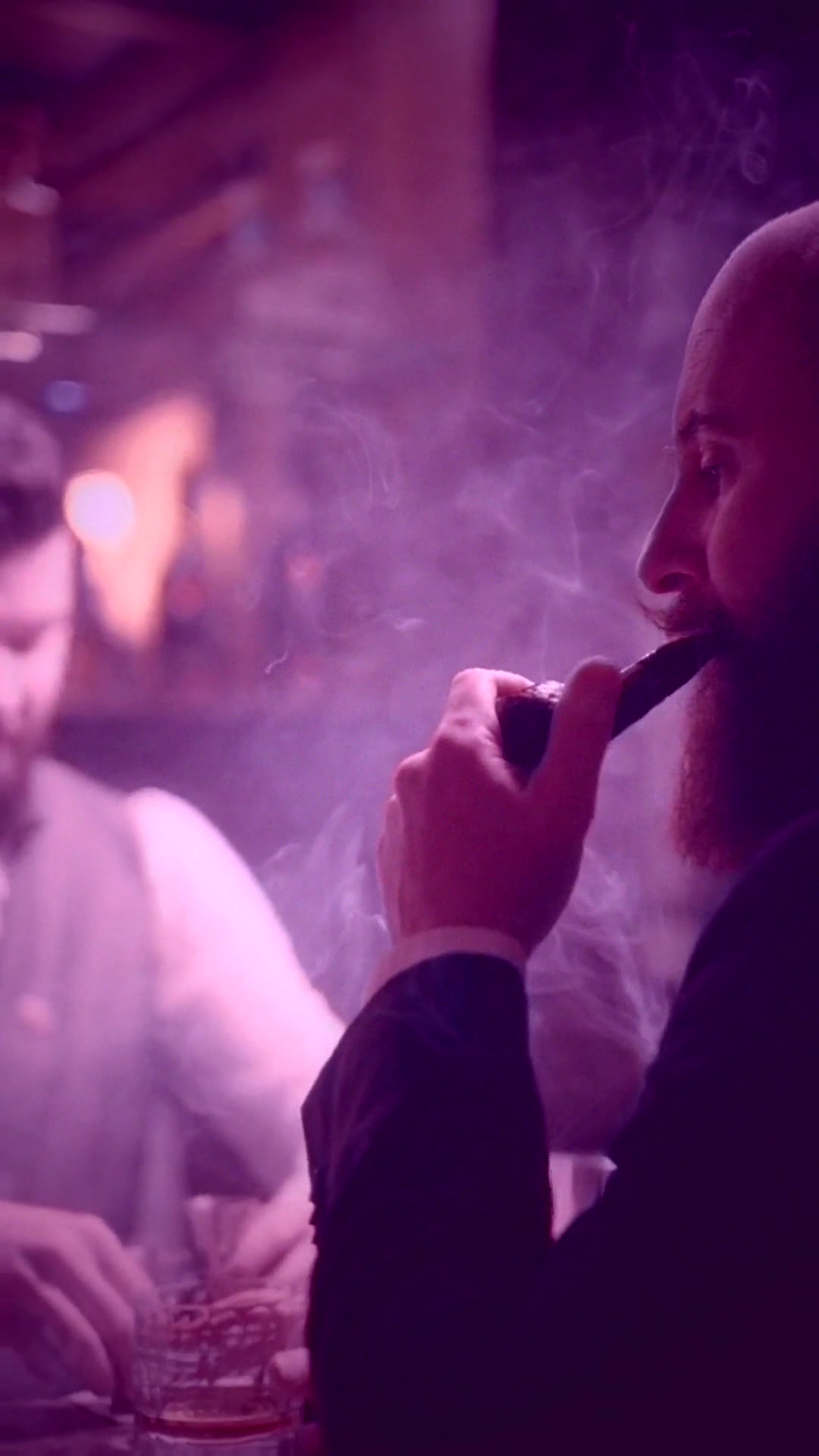 | 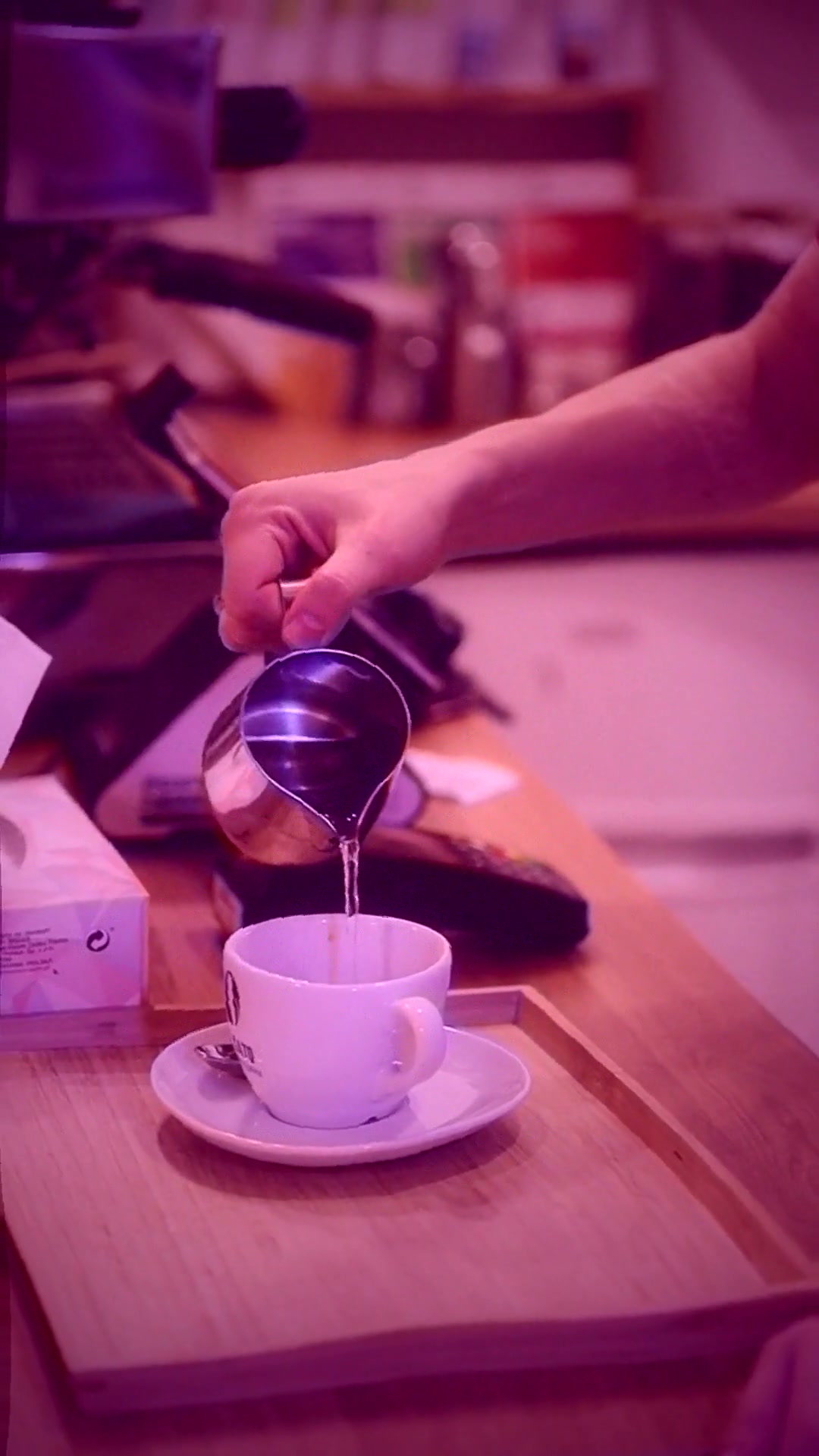 | 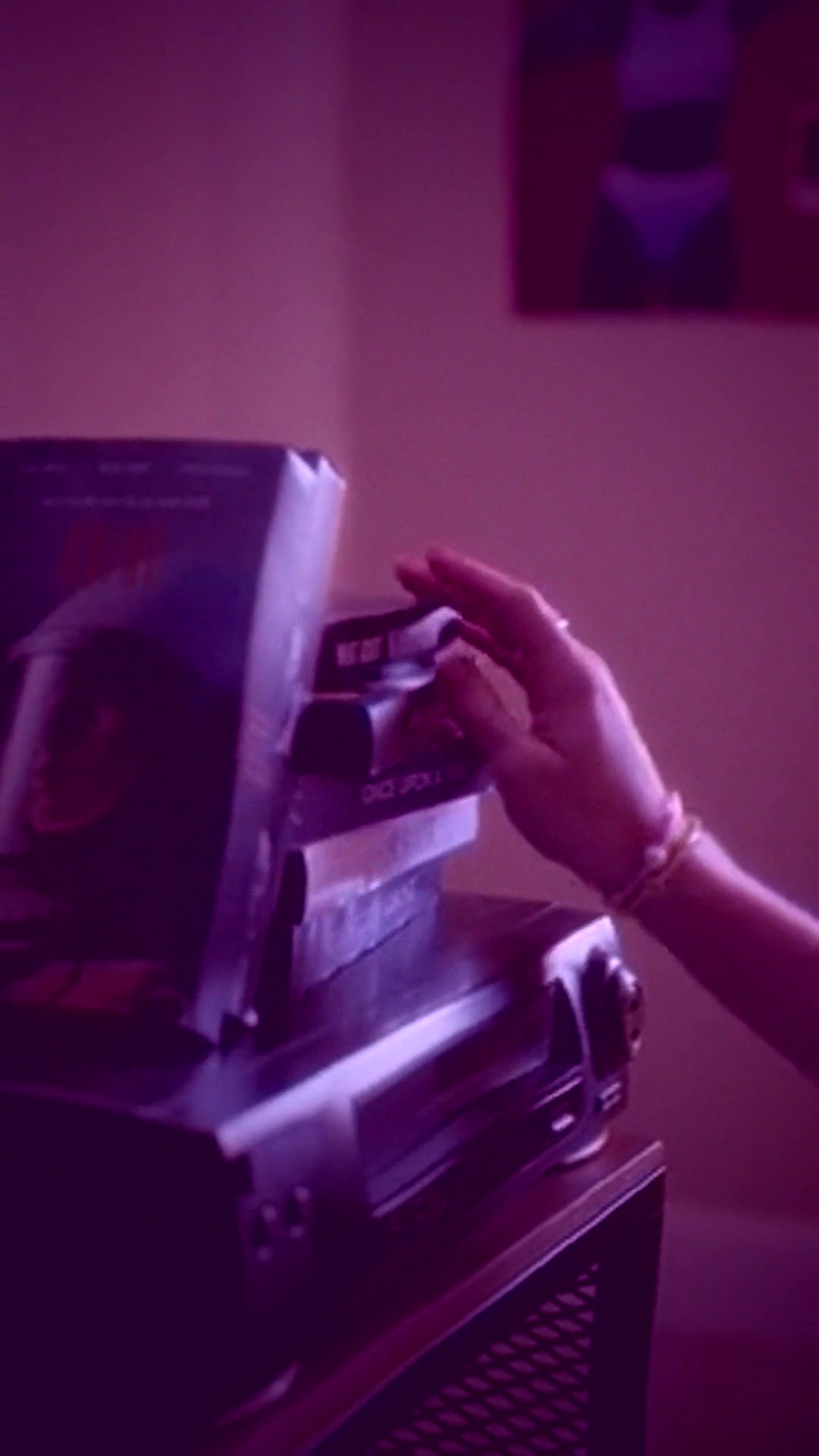 |
noir-detective · rnb_low_key | rain-lofi · lofi_warm_grain | arcade-synthwave · city_pop_neon |
 |  | 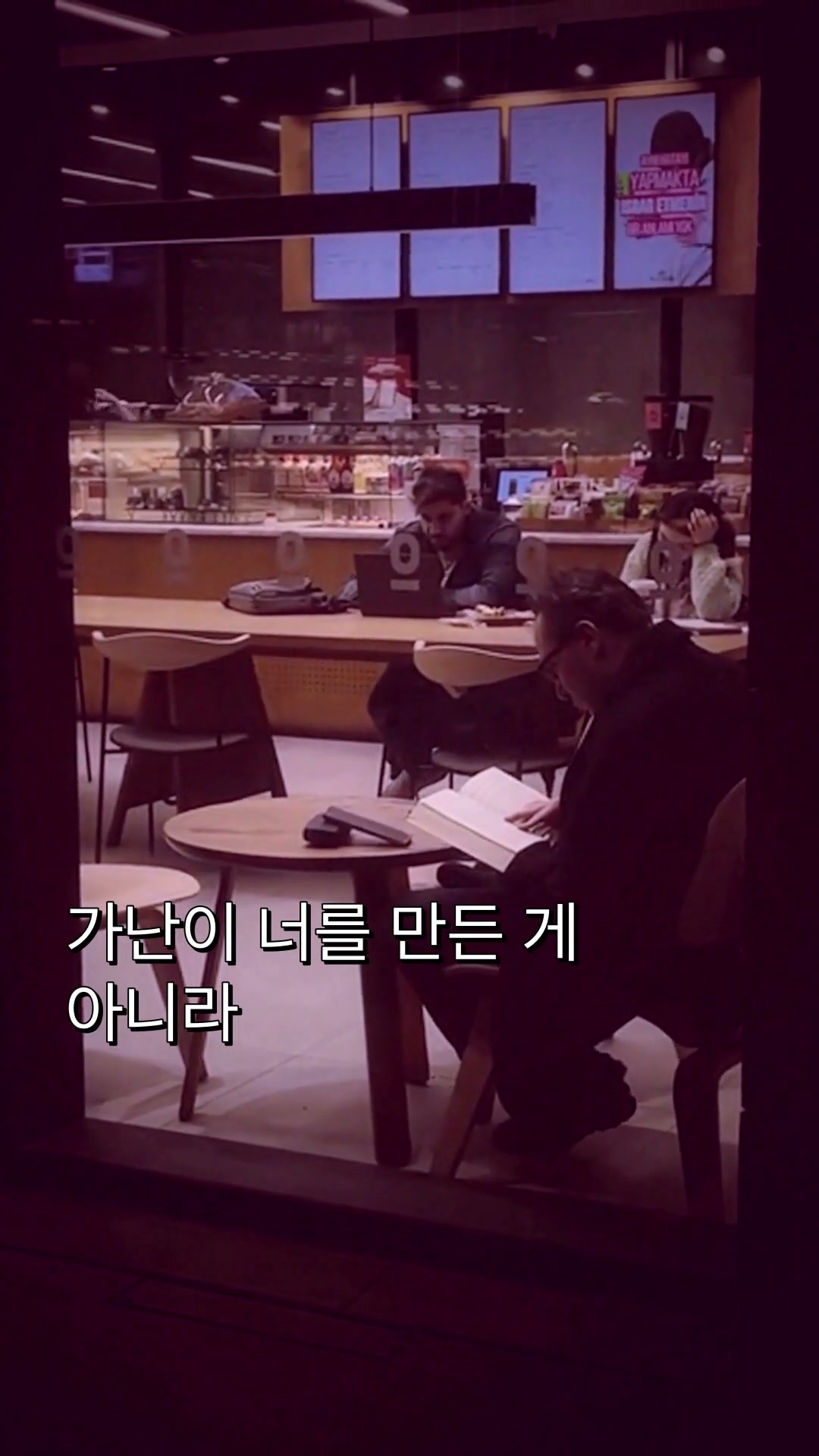 |
coastline-summer · hollywood_teal_orange | linen-minimal · kr_warm_pastel | smallhand-folk · with kinetic lyric overlay |
The 14 genre presets resolved per-render via
skills/music-video/data/genre-presets.yaml;
6 grade profiles compiled into ffmpeg filter graphs via
scripts/music-video-grade.sh. None
of these frames received any cherry-picked B-roll — every clip came
from the same generic Pexels mood-keyword fetch the pipeline runs
unattended. The visual identity is the grade + shader stack.
Reproduction (any track → 9:16 short):
./agents/missions/music-video/run.sh <id> <path/to/music.mp3>
# or batch a directory:
./scripts/music-video-batch.sh assets/music/*.mp3
Post-processing shaders — first pass (2026-05-17 evening)
The narrative below covers the first four shaders shipped on
2026-05-17. Nineteen more landed across 2026-05-21 (genre-aware
expansion: scanline / chromatic_split / neon_edge / vhs /
saturation_pulse / kaleidoscope / beat_burst / strobe / shake /
color_burst / light_rays) and 2026-05-22 (Stage-2 + Stage-3:
light_leak / duotone / vignette_pulse / paper_grain / dust_speck /
posterize / trail_echo / soft_bloom) — full catalog of 23 lives in
scripts/music-video-shaders.sh
and routes per-genre via
skills/music-video/data/genre-presets.yaml.
Operator asked for shader-style effects on top of the v6 vintage-lofi treatment. Three effects landed via pure ffmpeg filter graphs (no GLSL, no external tool) and one was deliberately deferred:
pond— Animated water-surface displacement on the whole frame. Two procedural displacement maps (X and Y) are generated bygeqas 3-component sin wave fields at 540×960 (4× faster than full res), scaled up via bicubic to 1080×1920, then fed intodisplace. Max ±13 px (~1.2 % of frame width) — visible across the entire image but not jarring. Reads as "the whole screen IS a pond surface, gently sway".breathing— Continuous gentle scale wave, 5 s period, +0–5 %. Always upscale so the post-cropframe never under-runs (the first attempt withsin(t)range −1 to +1 crashed libx264 mid-frame when scale went below 1080; fixed by reformulating as(0.5 + 0.5*sin)so the multiplier is always ≥ 1.0).halation— Warm light bloom around bright pixels. Split the source, brighten-threshold + 22 px gblur the copy, screen-blend back onto the original at 0.30 opacity. Looks like 80s-film light leak on amber / neon regions — operator confirmed "확실히 티남" (clearly visible) on first pass.combo—pond+halationwith phrase-aware strength envelopes. Both effects' intensity is a function ofT(time): off / quiet during intro (0–15 s), ramping up across the build (15–22.5 s), full during the climax (22.5–45 s), tapering through the wind-down (45–52.5 s), settling for the outro (52.5–60 s). The phrase boundaries on the original reference track match the 95.8 BPM × 12-beat phrase = 7.5 s cadence; for other tracks the envelope is parameterised in the script.
What was not attempted: cel-shading / cartoon rendering. ffmpeg
posterising luma and chroma independently (lutyuv with
round(val/N)*N quantisation) breaks hue — operator's reaction was
"완전 그냥 초록색만 나옴" (everything turned green). Real cel-shading
requires either GLSL shaders (mpv + libplacebo, ~200–500 LOC),
EbSynth (paint one keyframe, propagate by motion), or AI stylisation
(Stable Diffusion + AnimateDiff, ComfyUI, RunwayML / Kaiber). None
of those fit inside the ffmpeg pipeline, so the cartoon route is
parked as a separate R&D branch rather than half-implemented in
production.
Reproduction:
# Apply a single effect
./scripts/music-video-shaders.sh pond     <input.mp4> <output.mp4>
./scripts/music-video-shaders.sh halation <input.mp4> <output.mp4>

# Phrase-aware combo (the validated end product)
./scripts/music-video-shaders.sh combo    <input.mp4> <output.mp4>
These predate the music-video pivot and stay in the tree as alternate paths (not the current production format). Collapsed because they no longer reflect what the pipeline actively ships, but preserved as evidence of how the system evolved.
faceless-short mission (narration-driven)
Topic prompt in → ollama drafts the script → Kokoro-ONNX (am_michael, or macOS Yuna for Korean) synthesizes voice → whisper.cpp transcribes for timing → script-aware caption correction maps proper nouns back to the original script → SRT cues split to single-line at punctuation breaks → ollama extracts one Pexels search term per narration window (8 windows) → Pexels fetches B-roll per window → ffmpeg crops 9:16, burns libass captions + attribution overlay.
Pilot deliverables (Hittites + Hydrogen, EN + KO each), per-pilot cost $0:
| Hittites (history × Bible) | Hydrogen (science) | |
|---|---|---|
| EN | 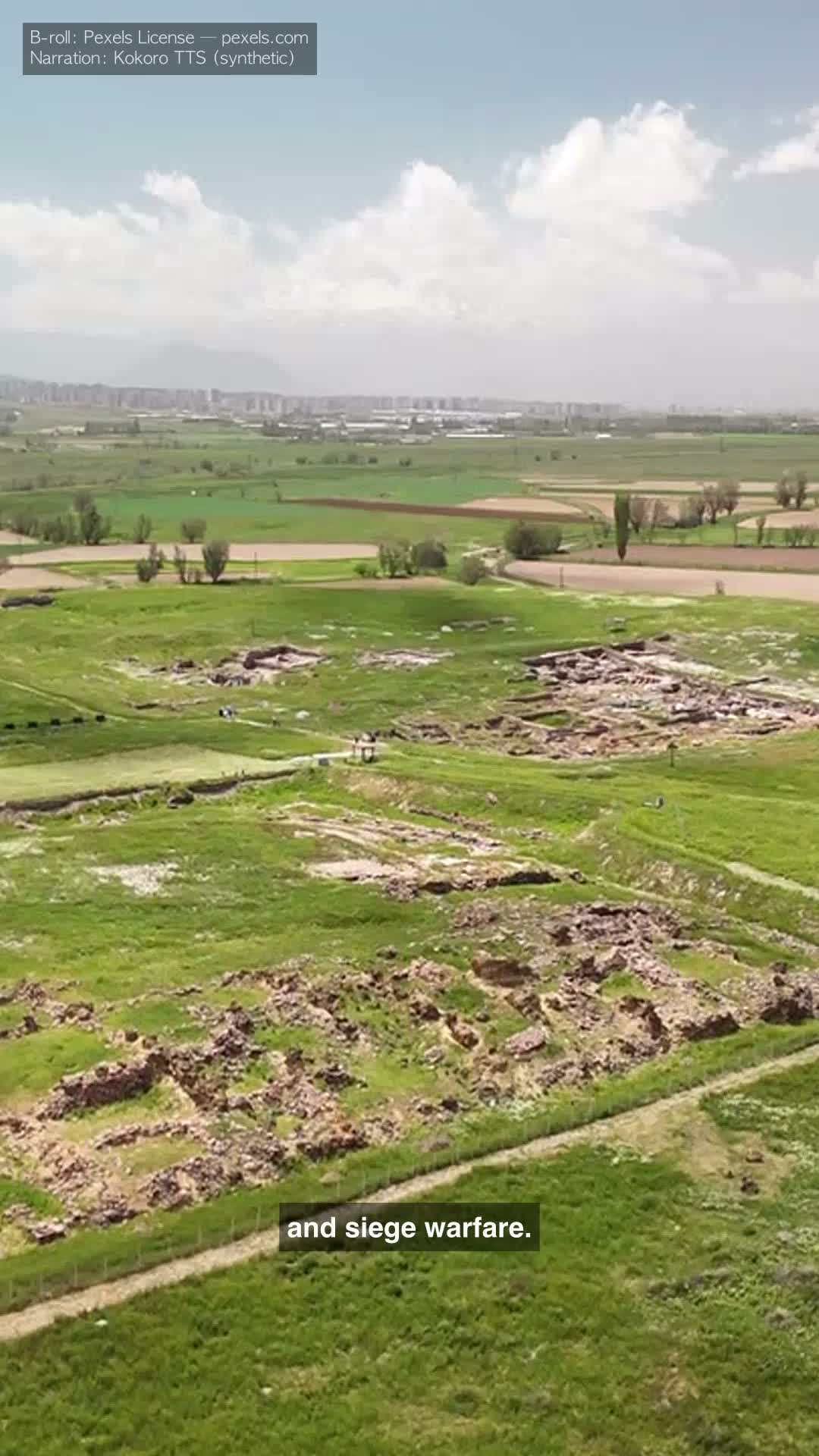 | 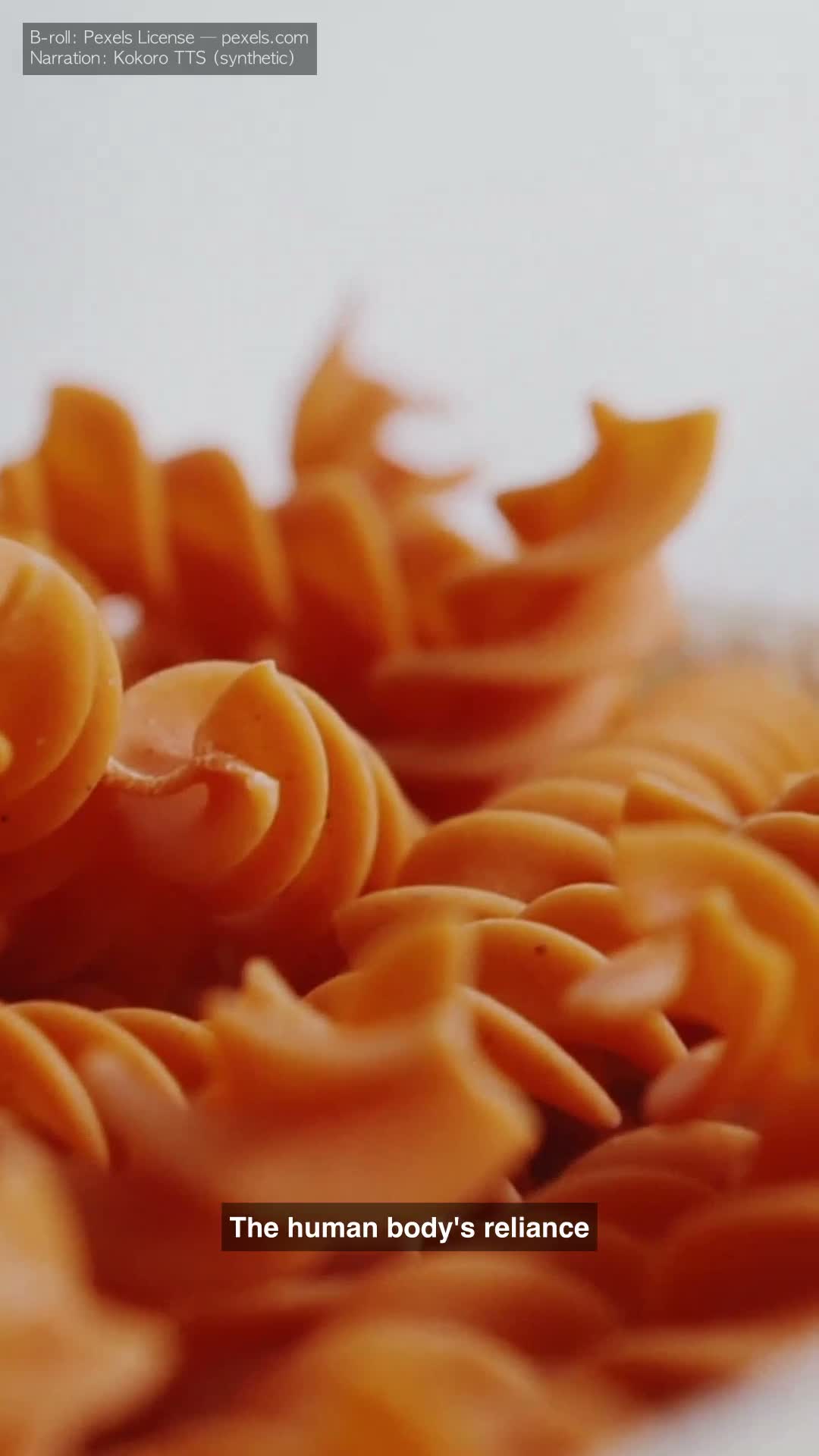 |
| KO | 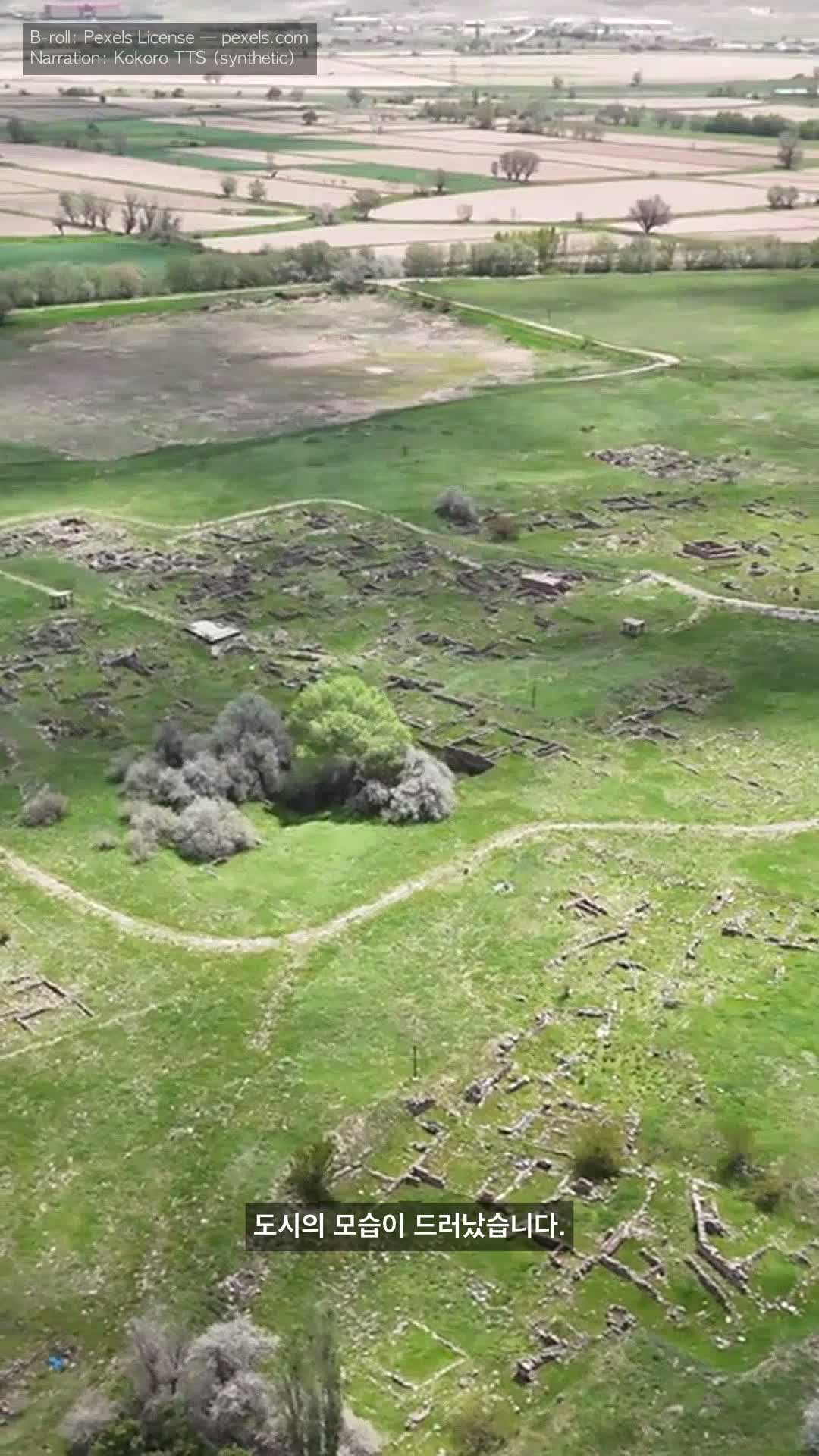 | 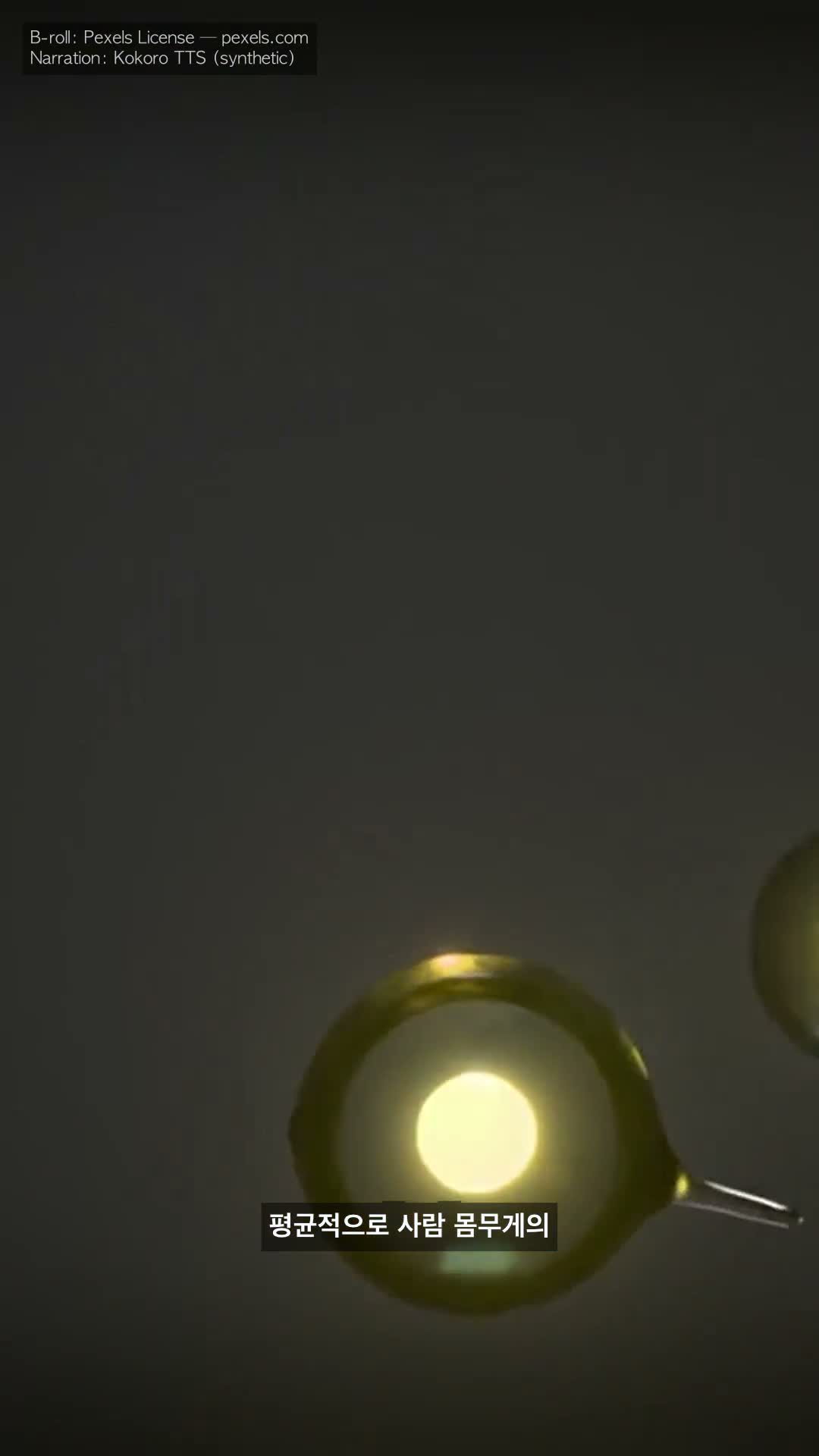 |
Each language variant picks its own B-roll from its own captions; FACELESS_REUSE_BROLL=<en_mission_dir> forces visual parity when an apples-to-apples "same visuals, swapped audio" test is wanted. A/B notes + upload metadata + topic queue under docs/pilots/.
v1 pipeline — highlight / summarize / shorts-batch
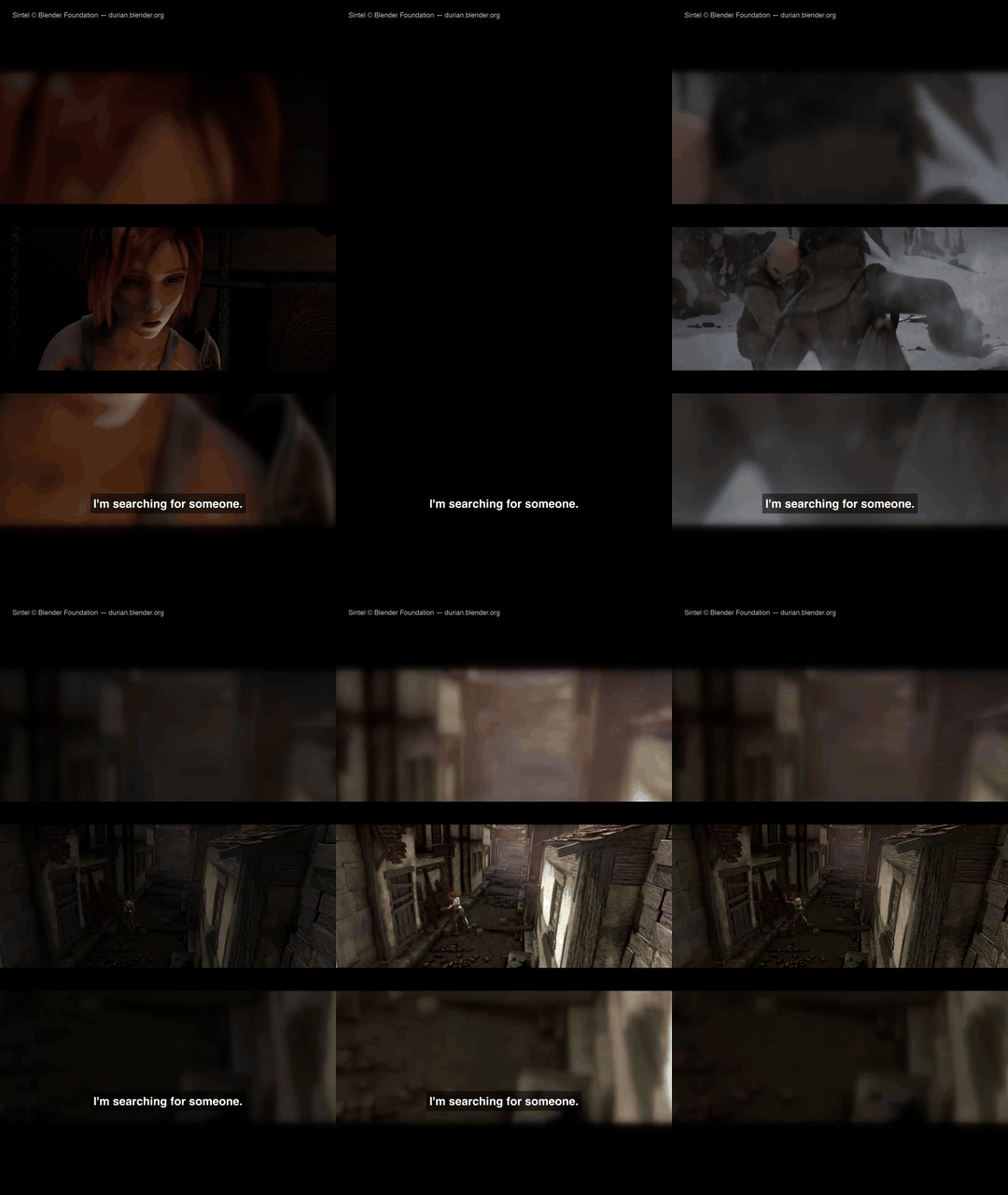
Takes a real source URL (e.g., a Creative-Commons video) and produces 9:16 outputs with burned-in source attribution + captions. Still in active use when you want a clip from a video rather than a clip of a topic.
| Single highlight | Shorts batch |
|---|---|
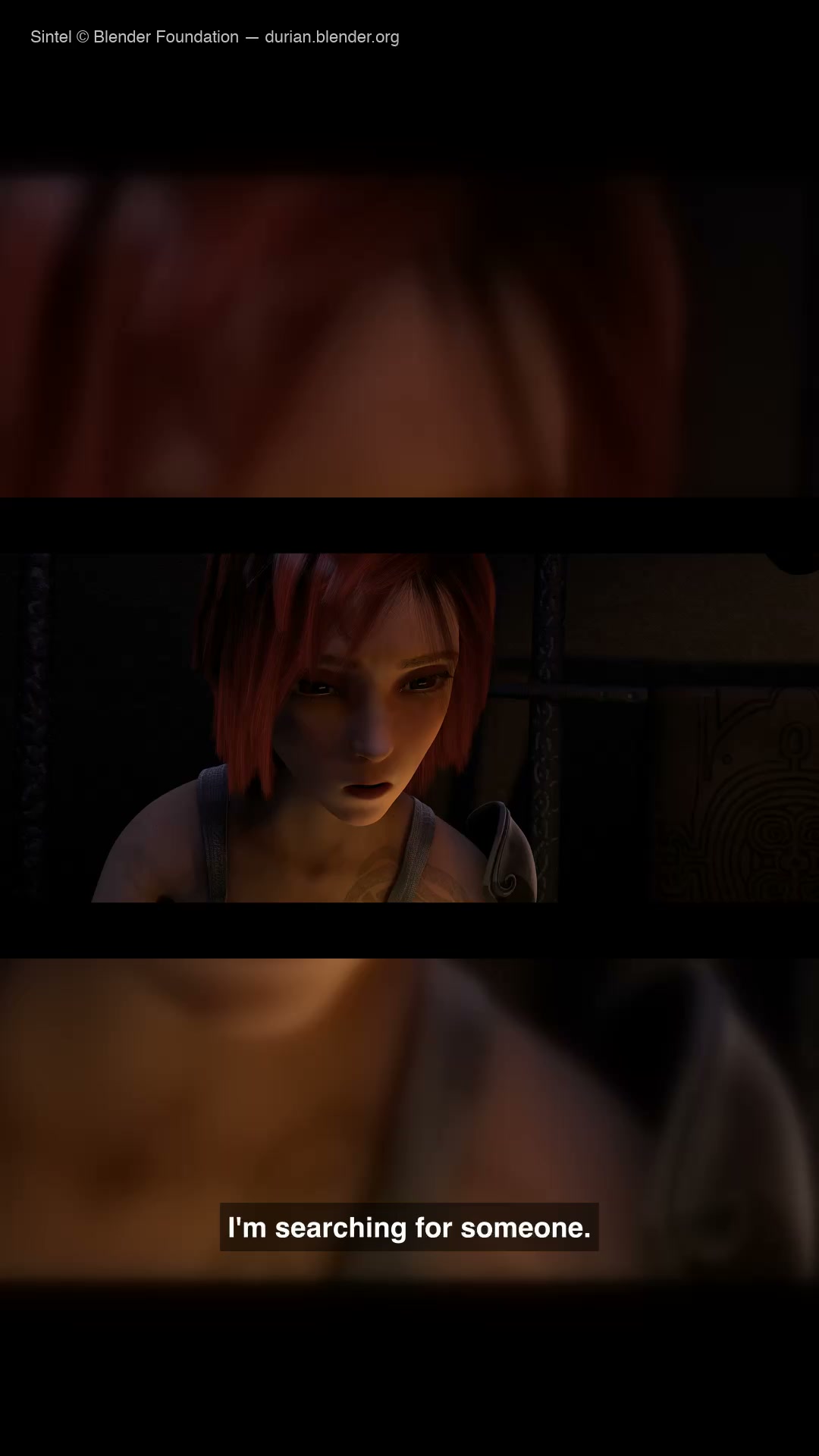 | 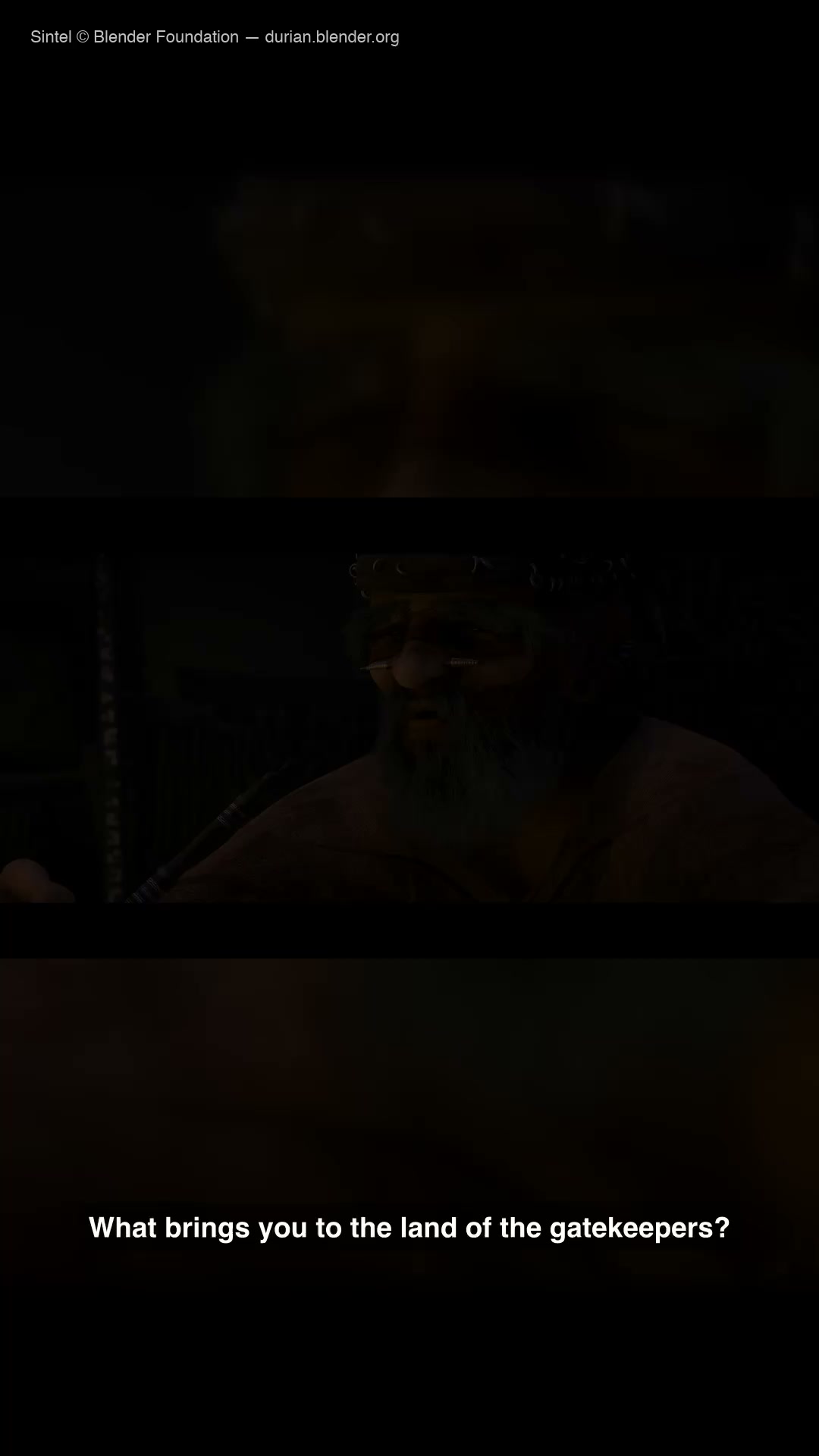 |
highlight-015213 · 39 s · PASS attempt 1 | shorts-batch-024840 / short-01 · 44 s · PASS attempt 1 |
Both from the Sintel trailer (CC-BY-3.0, © Blender Foundation).
Faceless-pilot scorecard
Structured progress signal from the v4 → v5 → v6 iterations that preceded the music-video pivot. The music-video mission uses platform watch-time data instead of per-dimension scoring; per-video metrics live under docs/pilots/.
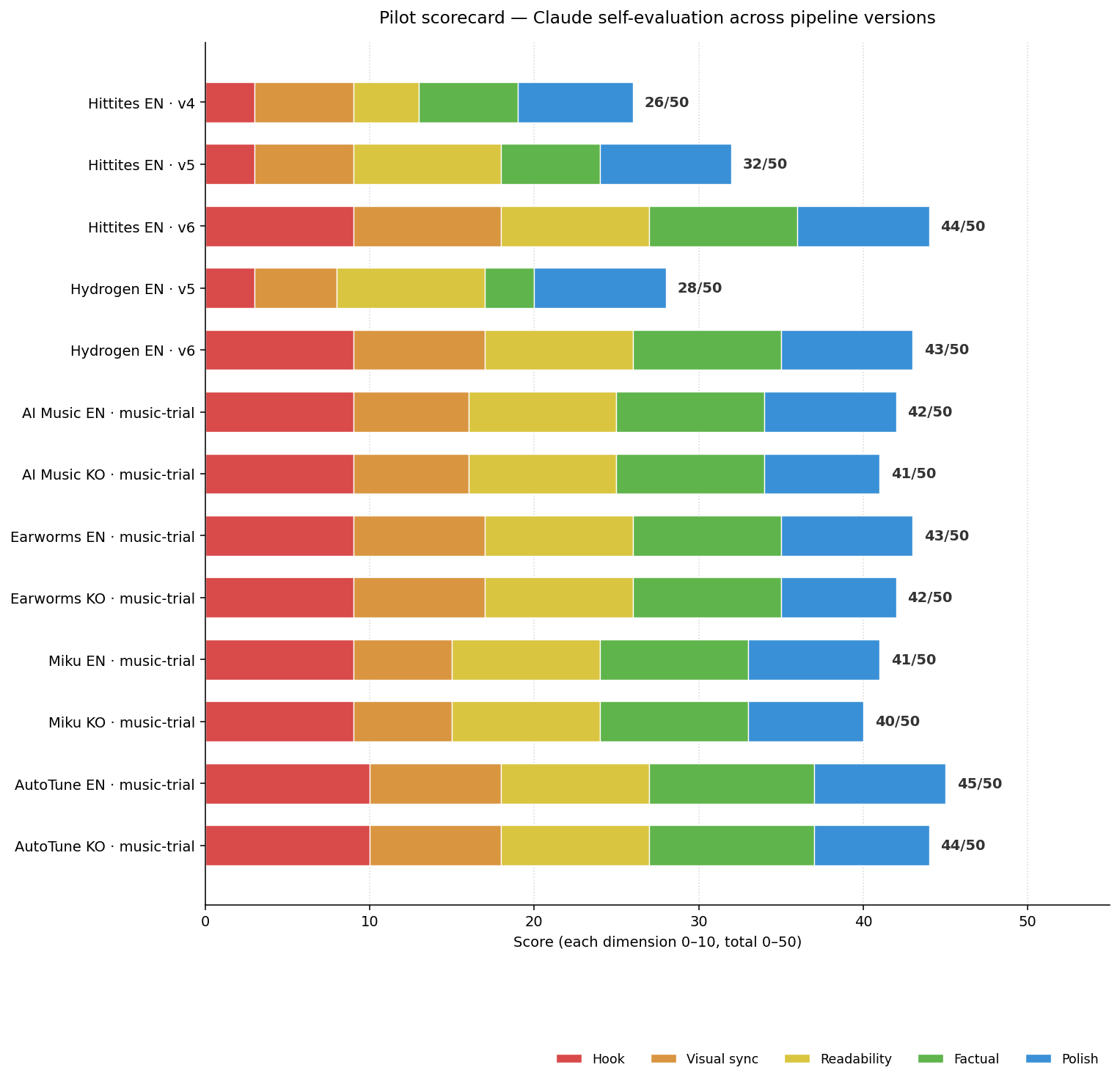
The v5 → v6 lift (+12 Hittites EN, +15 Hydrogen EN) came from swapping the script-generation stage from local llama3.2:3b to Claude Sonnet; gains concentrated in Hook and Factual coherence — exactly what the operator flagged as broken in v5. Scores were Claude self-assessed, not a viewer panel. Full breakdown in docs/pilots/scorecard.md.
For analysts / reviewers
Doing a read-only analysis of this repository? Start at
docs/for-analysts.md — a single-file entry
point optimized for first-pass diagnosis. Pairs with
docs/cost-model.md (where Anthropic vs. local
cost lives) and docs/architecture.md (full
data-flow map).
Architecture
The system does not force every skill through a single shape. Two shapes ship today, both agentskills.io-compliant; new skills pick whichever fits the work:
   Skill invocation (agentskills.io spec)
                │
                ▼
   ┌─ Shape A — Missions-routed (5-agent pipeline) ────────────────────┐
   │                                                                    │
   │     ┌─────────────┐                                                │
   │     │Orchestrator │  opus       Tier 1 — Anthropic API             │
   │     └──────┬──────┘             (Claude Code CLI runtime)          │
   │       ┌───┴───┬────────┬────────┐                                  │
   │       ▼       ▼        ▼        ▼                                  │
   │   Planner Resourcer  Editor    QA                                  │
   │    opus     opus    sonnet  sonnet                                 │
   │       │       │        │        │                                  │
   │       └───── files (plan.md / MANIFEST.md / qa-report.md) ─────    │
   │                              │                                     │
   │   Pick when: each stage carries real work (planner reasoning,      │
   │   resourcer fetching, editor multi-stage render, qa codec/dur     │
   │   verification).  Example: skills/music-video/ — its scripts/      │
   │   run.sh is a symlink to agents/missions/music-video/run.sh so     │
   │   the skill inherits the mission's tuning + retry loops.           │
   └────────────────────────────────────────────────────────────────────┘

   ┌─ Shape B — Standalone (skill IS the implementation) ──────────────┐
   │                                                                    │
   │     skills/<name>/scripts/run.sh    (no orchestrator / no plan.md  │
   │              │                       / no qa-report.md, just the   │
   │              ▼                       skill's own pipeline)         │
   │     mechanical pipeline (HTTP + parse + format + render)           │
   │                                                                    │
   │   Pick when: planner / qa stages would be near-empty (mechanical   │
   │   work, low creativity).  Skipping them removes 4 file-based       │
   │   handoffs per invocation.  Example: skills/job-hunt/ —            │
   │   filter→fetch→dedupe→render is all curl+jq, planner/qa would     │
   │   be no-ops.                                                       │
   └────────────────────────────────────────────────────────────────────┘

   ┌─ Shape ? — Future skills (e.g., movie / game / longform analysis)─┐
   │                                                                    │
   │   Open question.  Likely candidates by work shape:                 │
   │     - Multi-asset analysis with per-asset Claude critique →        │
   │       missions-routed (planner = scene split, editor = critique    │
   │       composition, qa = factual / spoiler check).                  │
   │     - URL → metadata → LLM summary → markdown digest →             │
   │       standalone (same shape as job-hunt).                         │
   │     - Long-running stateful (e.g., persistent playthrough) →       │
   │       may need a new Shape C with checkpoint/resume.               │
   │   Decision lands per-skill in SKILL.md `metadata.pipeline-source`. │
   │   See docs/architecture.md "Skills layer — two shapes" for the     │
   │   selection table.                                                 │
   └────────────────────────────────────────────────────────────────────┘

   ── Local execution layer (both shapes share) ──────────────────────
       Tier 2: ffmpeg / whisper.cpp / ollama / aubio / curl + jq
       Writes to records/missions/<date>/<id>/ or records/<skill>/<date>/

   ── Operator surface (Claude-free, ~2s) ────────────────────────────
       review-queue   doctor.sh   statusline   morning-brief.sh
       Absorbs status-check prompts so the operator can scan state
       without typing.

   ── Auditor (out-of-band, read-only, three trigger layers) ─────────
       L1 post-commit hook (drift-risk paths) → audit-run.sh contract
       L2 15-min mission-anomaly poll         → focused audit
       L3 daily 03:00 baseline via launchd    → audit-run.sh all
       Writes docs/audit/<date>-<focus>.md + CURRENT-ALERT.md.
The Shape A subagents currently run at: planner=opus,
resourcer=opus, editor=sonnet, qa=sonnet. Planner +
resourcer were upgraded to opus 2026-05-22 ~17:40 KST after a
single A/B run on the Hittites faceless-short brief (verdict in
docs/research/2026-05-22-abtest-planner-opus.md):
the measurable token / wall-clock delta was negligible (+5.9% tokens,
identical wall-clock), but opus showed one observable cross-stage
reasoning advantage that warranted a multi-week production trial
rather than a one-shot revert. Re-evaluate after ~10-20 production
missions have accumulated under the new setting; if the opus signal
doesn't compound across a real workload, revert to sonnet. Editor +
qa stay on sonnet — those stages are the most bash-scripted in
practice, with little room for opus's reasoning depth to bite.
| Agent | Responsibility | Output |
|---|---|---|
| 🤖 Orchestrator (opus) | Mission decomposition, delegation, final synthesis | task list · summary.md |
| 🧠 Planner (opus, since 2026-05-22) | Strategy, work breakdown, acceptance criteria | plan.md |
| 📦 Resourcer (opus, since 2026-05-22) | Asset fetching, external tool execution (ffmpeg / yt-dlp / whisper) | resources/MANIFEST.md |
| 🎞️ Editor (sonnet) | Output rendering, deliverable assembly | outputs/CHANGELOG.md |
| ✅ QA (sonnet) | Validation against plan criteria, regression detection | qa-report.md |
| 🔍 Auditor (sonnet) | Repository-wide drift / contract / cost / security audit (out-of-band, daily 03:00) | docs/audit/<date>-<focus>.md + docs/audit/CURRENT-ALERT.md when non-CLEAN |
Subagent definitions: .claude/agents/ · Mission templates and shared shell libs: agents/
Game prototype architecture (Skill #3-A — PawnSim)
The game prototype is a separate Unity codebase that the game-dev-agent
meta-skill scaffolds end-to-end from the CLI. Its architecture is two layers:
the generator (agent-side, the build chain) and the generated (the Unity
project itself).
   ── Generator: game-dev-agent CLI (no manual Unity Editor work) ─────
       agent.py gen-sprite / gen-sprite-proc   sprites (SDXL / procedural / PIL palette.py)
       agent.py gen-sfx                         procedural WAV SFX
       agent.py integrate --method scenes       Unity batchmode → SceneSetup.GenerateAll
       agent.py integrate --method build        Unity batchmode → BuildScript.BuildWindows
       refactor_check.py (6-stage gate)         scenes→build→QA shot→log scan→visual diff→PlayMode
       repro_all.py (15-scenario commit gate)   input-level repro: synthesized clicks + effect assertions

   ── Generated: skills/game-prototype/unity-project/Assets/ ──────────
       Editor/    SceneSetup.cs (+14 partials) — programmatic scene/prefab gen
                  BuildScript.cs               — headless build entry points
       Scripts/
         Core/    Services.cs (ServiceLocator — 5 singletons → testable lookup)
         Data/    PawnStats / HealthPartsConfig (SO-externalized tuning)
         AI/      IPawnAction + PawnActions (utility-AI Strategy pattern)
         Tests/   V-series PlayMode scenarios
         (~50+ runtime components: PawnEntity, PathGrid, AStar,
          ReservationManager, BuildManager, AIDirector, AudioBank, …)
       Sprites/   palette.py + PIL generators + SDXL/procedural art
       Audio/     procedural WAV (+ _gen_sfx.py)
       Prefabs/   Pawn / Wall / Floor / Door / Stove / Bed / …
       Scenes/    MainMenu.unity · Game.unity (both regenerated, not hand-edited)
Three design choices carry the game's internal architecture: utility-AI
Strategy pattern (each colonist job is an IPawnAction scored per tick, so
behaviours compose without a giant state machine), ServiceLocator (5
runtime singletons resolved through a testable lookup instead of static refs),
and SO-externalized tuning (pawn/health numbers live in ScriptableObjects,
not hard-coded). SceneSetup.cs was split 1057L → ~310L across 14 partials so
scene generation stays reviewable. One sharp edge worth flagging here:
[SerializeField] values bake into .prefab/.unity, so a source-default
change only takes effect once the regenerated prefab/scene is committed too —
several "fix didn't apply" incidents trace back to this.
Full structure, controls, feature coverage, and the honest verification status:
skills/game-prototype/README.md. The
meta-skill that drives it: skills/game-dev-agent/.
Code / Data separation
| Layer | Path | Tracked |
|---|---|---|
| Code (logic) | .claude/agents/, agents/, config/, scripts/ | ✓ |
| Skills (agentskills.io-spec packages) | skills/<name>/ | ✓ |
| Data (outputs) | records/missions/<date>/<id>/ | ✗ (gitignored) |
| Secrets | .env | ✗ (gitignored) |
The repository contains only the agent system itself. Mission outputs —
videos, transcripts, generated assets — stay local under records/.
What appears on GitHub is the system's own evolution, not its products.
Platform support
| Surface | macOS 14+ | Linux | Windows 11 |
|---|---|---|---|
| Mission execution (transcribe → select → render → QA) | ✓ primary | ✓ best-effort | ✓ best-effort (bash via git-bash) |
| Hardware-accelerated render | ✓ h264_videotoolbox (Apple Silicon) | h264_nvenc (NVIDIA) or fallback libx264 via -allow_sw 1 | ✓ h264_nvenc (NVIDIA — primary) or h264_qsv (Intel) / libx264 fallback |
| Local AI video gen (LTX-Video / SVD / AnimateDiff) | possible but no NVENC → slower | NVIDIA Linux works | ✓ primary (Mix #2 longform = Windows + RTX 4070 Ti SUPER) |
bootstrap.sh synthetic fixtures (macOS say-based TTS) | ✓ | skipped — point at real CC fixtures via scripts/fetch-fixtures.sh | skipped — run scripts/windows/setup-env.ps1 then point at real CC fixtures |
| Schedulers (nightly auto-run, daily audit) | ✓ launchd | replace with systemd timers or cron | replace with Task Scheduler (manual; TODO scripts/windows/install-scheduler.ps1) |
| Windows setup guide | n/a | n/a | docs/platform-windows.md |
macOS is the primary, end-to-end tested platform for the media pipeline; the game-prototype track (PawnSim build chain, Unity batchmode) is Windows-primary. Linux works for mission execution but the schedulers and synthetic-fixture generation need OS-specific adaptation. Cross-platform CI is not yet in place; the clone-and-go flow is verified on Darwin only.
All tool paths and endpoints are env-managed — agents/lib/env.sh
resolves any blank *_BIN var via command -v, so a working PATH
install is enough. Override in .env only when needed.
Autonomy modes
Defined in config/policies.yaml.
| Mode | Flag | Behavior |
|---|---|---|
| ⚙️ Interactive (default) | AUTONOMY_MODE=false | Pauses for user confirmation on logic changes, destructive ops, and external publishes. |
| 🌙 Autonomous | AUTONOMY_MODE=true | Runs unattended within AUTONOMY_BUDGET_USD. Logic files (agents/, .claude/agents/) are immutable. |
Mission flow
- User states a mission.
orchestratoropensrecords/missions/<date>/<id>/+ a task list.planner→plan.mdwith acceptance criteria.resourcer→ assets +resources/MANIFEST.md.editor→ deliverables +outputs/CHANGELOG.md.qa→qa-report.mdwith PASS / FAIL per criterion.- On PASS,
orchestratorwritessummary.md.
Toolchain
Agent layer: Claude Code
(Anthropic CLI — drives the multi-agent orchestration; subagent
definitions in .claude/agents/, per-project
configuration in CLAUDE.md +
.claude/settings.json).
Mission tools: ffmpeg (libass-enabled — brew install ffmpeg-full
on macOS, apt install ffmpeg on Linux) · aubio (beat / onset
detection — brew install aubio) · jq · yt-dlp · whisper.cpp
(small, multilingual) · ollama (llama3.2:3b) · Kokoro-ONNX
(TTS, Apache 2.0 — faceless-short narration) · macOS say (Korean +
fallback voice) · Pexels Videos API (free tier — B-roll for
music-video + faceless-short).
Prerequisites
- macOS 14+ (primary, fully tested) or Linux (best-effort) or Windows 11 (best-effort, NVIDIA + git-bash path — primary for local AI video work) —
see Platform support above; Windows setup at
docs/platform-windows.md. - Claude Code — only required for the agent-driven path (orchestrator + subagents taking over the whole pipeline). The script-only path runs without it. See the Claude Code pricing + usage guidance section below for plan selection.
- Homebrew on macOS, or
apt/pacman/ equivalent on Linux - Apple Silicon recommended —
h264_videotoolboxis used for hardware-accelerated render;-allow_sw 1is set so the pipeline falls back to libx264 on Intel / Linux - ~3 GB free disk — whisper.cpp
smallmodel (~150 MB), Pexels B-roll downloads (~50 MB / mission, auto-cleaned), output mp4s - Tools:
ffmpeg(built with libass),ffprobe,whisper.cpp,ollama,yt-dlp,aubio(for the music-video mission's beat / onset detection),jq.scripts/bootstrap.shchecks all of them and prints an exactbrew install …/apt install …command for anything missing, so a missing tool isn't a silent failure. - API key: free Pexels API key
(200 req/hour — plenty for personal use) for B-roll fetch.
bootstrap.shwarns ifPEXELS_API_KEYisn't set in.env.
Claude Code pricing + usage guidance
Claude Code is what drives the multi-agent layer (orchestrator → planner → resourcer → editor → QA + the daily auditor). The mission scripts themselves run standalone and burn zero Anthropic tokens; only the agent-driven path consumes tokens.
Current Anthropic plans (always verify on the official pricing page — these change):
| Plan | Monthly | Typical fit for this repo |
|---|---|---|
| Free | $0 | Read-only browsing / quick experiments. Hits limits fast once a real mission runs. |
| Pro | $20 | One or two music-video missions per day. Single-operator, casual cadence. |
| Max — entry tier | $100 | A few missions per day plus overnight batches. Daily upload cadence becomes realistic. |
| Max — top tier | $200 | Production cadence (10+ missions / day, multi-track overnight batches, ongoing R&D in parallel). This is what this repo's operator runs. |
Rough token usage per mission (orchestration only — the local ffmpeg / ollama / whisper.cpp stages are free):
| Mission | Anthropic tokens (estimate) | Notes |
|---|---|---|
music-video (one render + shader) | ~50–150 k | Orchestrator + planner + resourcer = opus; editor + qa = sonnet (since 2026-05-22). Token spend dominated by planner + editor (filter-graph reasoning). Music-video is fully bash-scripted so subagents barely trigger — most of this estimate is operator chat, not subagent inference. |
faceless-short (one render) | ~100–250 k | Higher because the planner also drafts the narration script. v6 with Sonnet for script generation runs closer to the top of the range. |
audit-run.sh contract (out-of-band) | ~20–50 k | One audit pass over the repo. |
Daily mission-queue.sh drain | ~50–150 k × N entries | Same as a single music-video mission per queue entry. |
These are rough. Real numbers vary with caption complexity, retry
counts (the QA feedback loop re-runs a failing stage), and how much
operator dialogue happens in the orchestrator turn. The Tier-1 / Tier-2
firewall — what stays local vs what goes to Anthropic — is documented
in docs/cost-model.md.
Cost-stability tips:
- Operator-facing chat with Claude Code can dominate token spend more than the missions themselves; keep planning conversations focused.
- The
autonomousmode (AUTONOMY_MODE=true) enforcesAUTONOMY_BUDGET_USD— useful for overnight batches. - Token receipts land in your Anthropic console; check after the first few mission runs to calibrate your plan choice.
Quick start
Latest stable tag:
v0.4.0— Skill #2 (job-hunt) shipped on top ofv0.3.0's permission bootstrap + pluggable B-roll andv0.2.0's Skills framework + zero-account demo path. Cloning the tag is the recommended first-touch entry point;mainmay contain in-flight work past the tag.
Skill #1 — music-video zero-account demo (~2 minutes from clone to playable mp4)
No Pexels signup, no Suno round-trip, no .env edit. Uses
bundled CC-BY Blender Foundation clips + Kevin MacLeod tracks
(both CC-BY 4.0 / 3.0 with attribution baked into
outputs/SOURCES.txt). Designed for "see what it produces
before committing accounts".
# 1) clone (any host with Mac/Linux + ffmpeg + ollama + aubio works)
git clone --depth 1 https://github.com/MelonS/MelonS-Agents.git
cd MelonS-Agents

# 2) one-command guided wizard — checks prerequisites, runs the
#    demo, opens the result.  Single Y/n decision; rest is automatic.
./scripts/first-touch.sh

# OR — manual path:
# 2a) bootstrap (verifies tools, prints brew/apt hints for anything missing;
#     detects no-key/no-music state and recommends the demo path automatically)
./scripts/bootstrap.sh
# 2b) zero-account demo — first run fetches the demo cache (~30s) then
#     renders (~100s).  Output at:
#     records/missions/<YYYY-MM-DD>/music-video-demo-<HHMMSS>/outputs/short.mp4
MUSIC_VIDEO_DEMO_MODE=1 ./agents/missions/music-video/run.sh demo
Reference for all music-video env vars + flags + shader catalog:
docs/music-video-pipeline-reference.md.
Skill #2 — job-hunt short-keyword demo (~5 seconds, no network)
Single keyword expands to a full role family + emits a markdown digest from mock-fallback sources (no live HTTP, no API keys, no operator-profile.md required).
# After the clone + bootstrap above:
skills/job-hunt/scripts/run.sh --seed "Problem Solver" --dry-run
# Output: digest.md path printed on stdout; open it to see the
# mock postings spanning multiple sources, all matched against the
# 24 synonym keywords in the "problem-solver" family.

# Try other seeds in the same family — all produce identical results:
skills/job-hunt/scripts/run.sh --seed "FDE" --dry-run
skills/job-hunt/scripts/run.sh --seed "Forward Deployed" --dry-run
skills/job-hunt/scripts/run.sh --seed "Generalist" --dry-run
For real postings without operator setup, flip the global-* plugins to live mode — no key required:
JH_GLOBAL_ATS_LIVE=1 JH_GLOBAL_REMOTEOK_LIVE=1 \
JH_GLOBAL_REMOTIVE_LIVE=1 JH_GLOBAL_HN_LIVE=1 \
JH_WORKNET_LIVE=1 \
skills/job-hunt/scripts/run.sh --seed "Problem Solver"
# Pulls Greenhouse + Ashby + Lever ATS boards (27 companies),
# RemoteOK / Remotive / HN monthly thread / 워크넷; ~5k raw
# postings filtered to the 24-keyword Problem Solver family.
# See docs/research/job-sources-survey-2026-05-21.md for the
# legal-and-technical audit behind which sources are live-ready.
See docs/samples/job-hunt-digest-mock.md
for what a digest looks like, and EXAMPLES.md for
the full recipe collection covering both skills.
To activate live HTTP per source (Wanted API key, Saramin
OpenAPI key, etc.) or live Claude calls for the 4 enrichment
utilities (fit-score / cover-letter / company-research /
interview-prep), see the walkthrough
docs/skills/job-hunt.md (English) or
docs/skills/job-hunt.ko.md (한국어).
Reproducibility gate: scripts/test-demo-mode.sh exercises the
whole path against a freshly-cloned tree (asserts short.mp4
≥ 1 MB, ≥ 50 s, SOURCES.txt with ≥ 2 CC-BY credit lines). PASS
log persists at
docs/onboarding/demo-mode-log.txt.
See docs/onboarding/demo-mode.md
for source customization, attribution requirements, and the
graduation path to the full Pexels + operator-music flow below.
Full path — operator music + per-keyword Pexels B-roll
For the unlocked mood-keyword catalog and operator-supplied tracks:
# 1) edit .env — set PEXELS_API_KEY (free; sign up at https://www.pexels.com/api/)

# 2) generate one or more music tracks on Suno (free tier, suno.com)
#    with prompts like "late night jazz lofi, soft piano, 60 BPM,
#    [Instrumental]" — download the mp3 and drop into assets/music/
#    (gitignored — license trail noted in assets/music/SOURCES.md)

# 3) run the music-video mission against your music file
./agents/missions/music-video/run.sh upload1 "assets/music/<your_track>.mp3"

# 4) (optional, but the whole point) apply the phrase-aware shader combo
#    — pond surface ripple + warm halation with envelope tied to a 95.8
#    BPM phrase cadence (tunable inside the script for other tempos):
./scripts/music-video-shaders.sh combo \
    records/missions/$(date +%Y-%m-%d)/music-video-upload1-*/outputs/short.mp4 \
    outputs/publish/my-first-short.mp4
The mission writes its base output to
records/missions/<date>/music-video-<id>-<HHMMSS>/outputs/short.mp4
(gitignored — products stay on your machine; only the agent system
itself is on GitHub). The shader step copies a final mp4 into
outputs/publish/, where you can pick it up for upload.
For a hands-off daily cadence, queue tracks in
records/queue/music-video-pending.txt and run
scripts/daily-music-video.sh --all (or schedule it via launchd / cron).
v1 flow — single-clip highlight (kept as a baseline)
./agents/missions/highlight/run.sh https://download.blender.org/durian/trailer/sintel_trailer-1080p.mp4
Multi-source batch and the autonomous queue drainer also exist for the v1 flow:
./scripts/batch-mission.sh -f sources.txt
echo 'https://example.com/long.mp4' >> records/queue/pending.txt
./scripts/mission-queue.sh
./scripts/install-scheduler.sh install      # nightly launchd
Skill #3 — game prototype (PawnSim) build + run
In development (not in the production-skill count), and the agent's most active play-test loop. Requires Windows + Unity 6000.0.75f1 LTS (the build chain runs the Editor in batchmode); the rest of the repo is Mac/Linux.
cd skills/game-prototype

# 1) regenerate scenes + prefabs (programmatic — no manual Editor work)
python ../game-dev-agent/scripts/agent.py integrate --project unity-project --method scenes

# 2) build the Windows .exe (headless)
python ../game-dev-agent/scripts/agent.py integrate --project unity-project --method build --day PLAY

# 3) run the NEWEST build — the per-day folder is date-stamped, so always
#    resolve it dynamically (a hardcoded date silently runs a stale build):
"$(ls -dt builds/day-*/ | head -1)PawnSim.exe"
No pre-built .exe is committed (builds/ is gitignored); step 2 produces it.
Useful flags: -starthour 22 (night demo), -delay 12 -screenshot <abs-path>
(headless capture), -opensettings (open the settings panel before capture).
Full controls, feature coverage, and the honest verification status live in
skills/game-prototype/README.md.
Operator contract
This repository is fully agent-operated. The day-to-day rules:
- The agent does all the work — installs, edits, configs, commits, pushes, scheduling. The user does not run commands in the terminal.
- The user steps in only when a hard guardrail blocks the agent (e.g., self-modifying its own permissions, force-pushing to
main) — and even then only as a single click of approval, never a multi-step recipe. - Outcome vs work queue, kept separate.
docs/goal.mdholds the active goal as a concrete deliverable;docs/roadmap.mdholds the day-level work queue (its Now section is the source of truth for "what to work on next"). - Money firewall: paid APIs, SaaS subscriptions, and cloud-resource creation require explicit user confirmation. Local resources (Ollama, FFmpeg, whisper.cpp, brew) stay fully autonomous.
Full contract: see CLAUDE.md and the config/policies.yaml autonomy rules.
License
MIT. See LICENSE.