
Claude Code Project Workflow
burnerbrown/claude-code-project-workflow
Pipeline conceito-para-código com agentes especializados e quality gates
Ver no GitHubSistema de fluxo de trabalho estruturado e orientado por agentes para Claude Code que guia projetos de conceito a código funcional. Implementa um processo de 7 etapas com agentes especializados em arquitetura, segurança de cadeia de suprimentos, conformidade e revisão de código.
Instalação
npx convez-ai burnerbrown/claude-code-project-workflow1 comando no terminal: detecta o formato do repositório (marketplace ou plugin avulso) e instala via Claude Code. Requer Node 18+ e o Claude Code instalado.
Métricas
Casos de uso
- Desenvolvimento estruturado de grandes projetos de software
- Implementação com verificações de segurança e conformidade automatizadas
- Orquestração de múltiplos agentes para diferentes fases do desenvolvimento
Veredito

Solução robusta e opinionada para equipes que precisam de governança forte durante desenvolvimento em IA. Requer Claude Pro/Max e disciplina operacional, mas entrega controle genuíno sobre fluxo de trabalho e segurança de dependências.
README
A tradução para o português deste README ainda está na fila.
Claude Code Project Workflow
A structured, agent-driven workflow system for Claude Code that guides projects from concept to working code — entirely from the terminal.
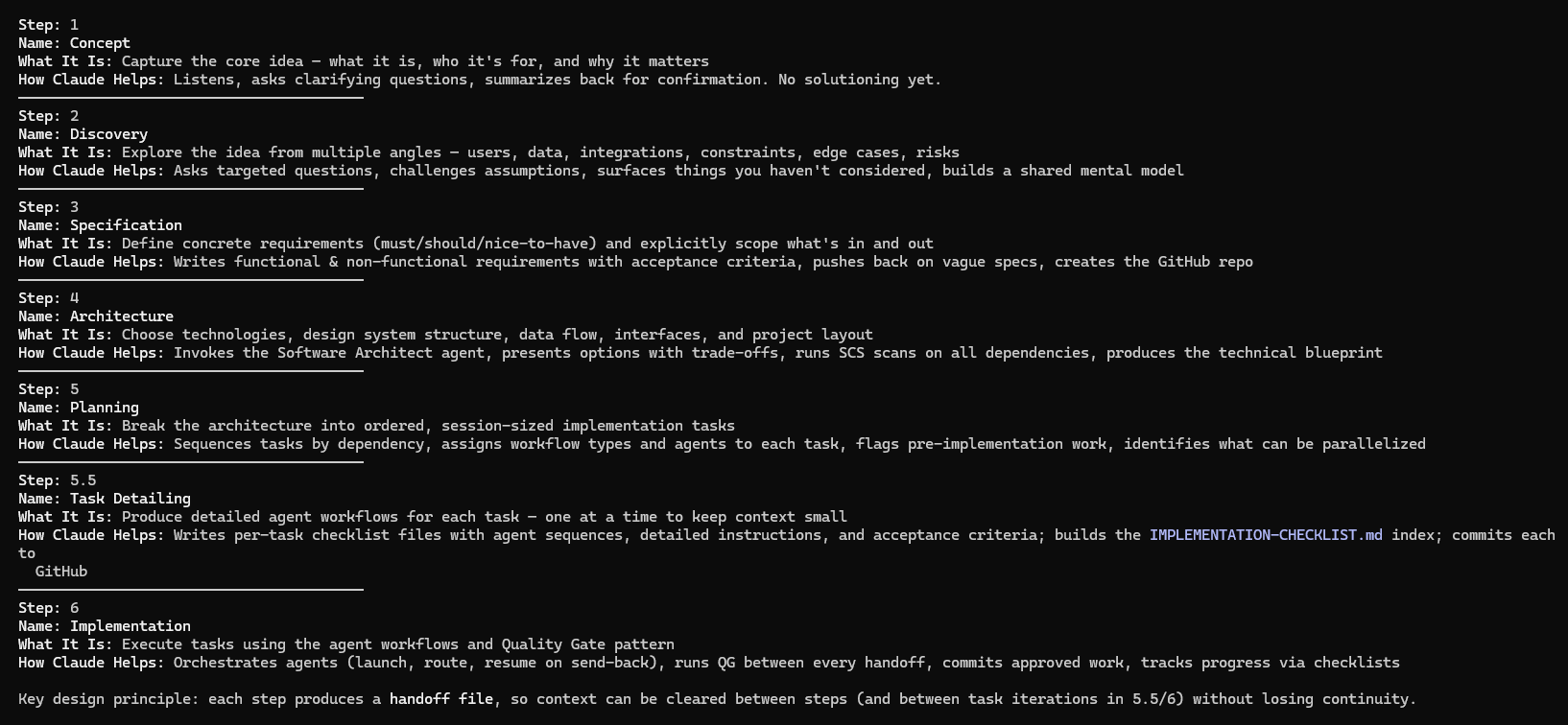
It uses a 7-step process that breaks down software development into focused phases, each with specialized agent support:
Why Pro or Max?
A Claude Code Pro subscription is recommended at minimum, with Max being ideal. Steps 4 and 6 involve significant agent workloads that benefit from higher usage limits:
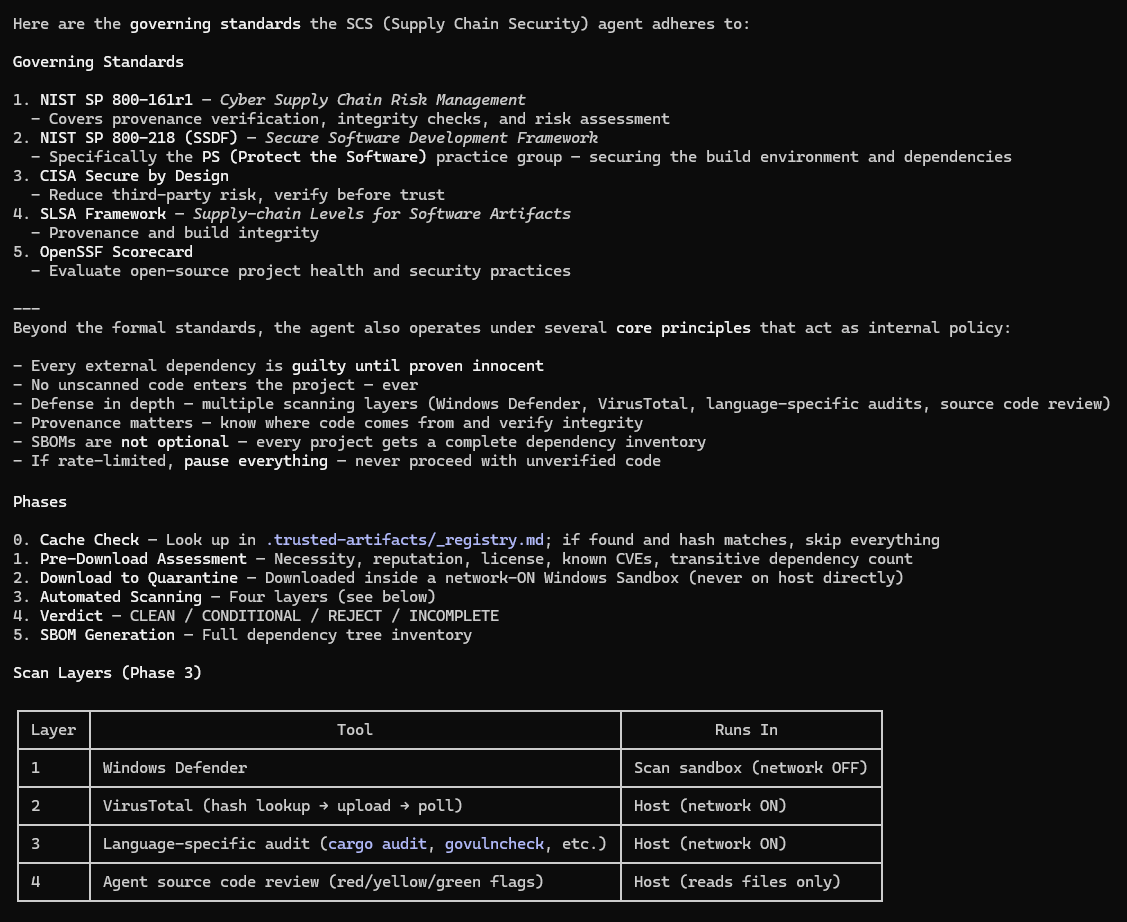
- Step 4 (Architecture) uses a Supply Chain Security agent that runs a 6-phase, 4-layer security scan on all external dependencies using a sandboxed approach.
- Step 6 (Implementation) executes tasks using an agent workflow design with 14 workflow types to match different task needs — from full feature development to embedded firmware, hardware design, and dependency addition.

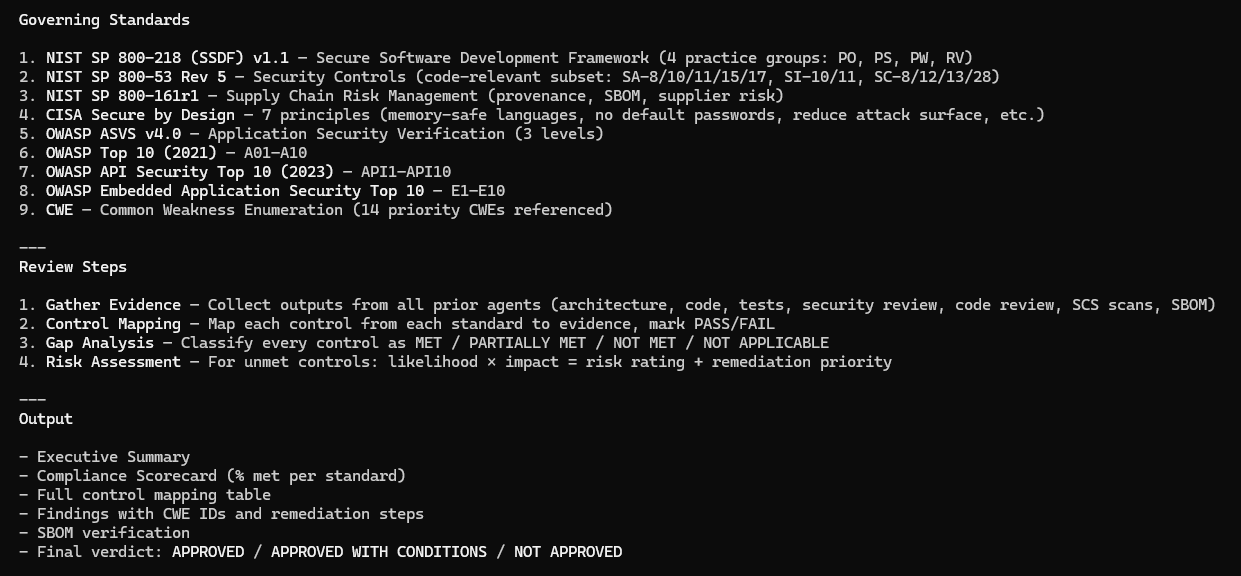
Step 6 also employs a Compliance Reviewer agent where necessary, mapping code against NIST, CISA, OWASP, and CWE standards:
How Implementation Works
During Step 6, any issues found by agents are sent back to the appropriate agent for rework. The reworked code then passes back through the review chain until all work satisfies the requirements. All agent IDs are kept active during the entire task to preserve context in case of rework. Claude only orchestrates — all work is done by agents with specialized roles. See Security & Control for how this separation is enforced.
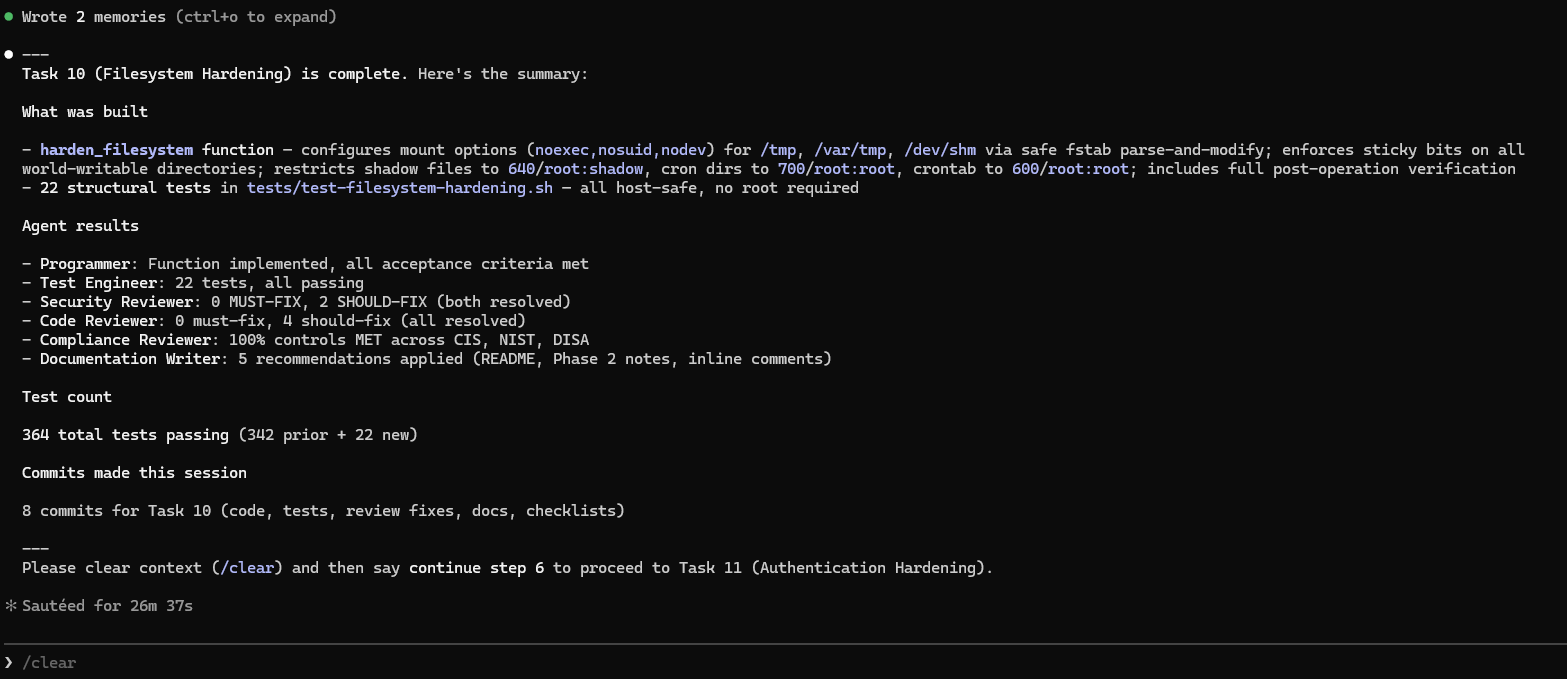
Example task completion output:
Example workflow: Full Feature Development
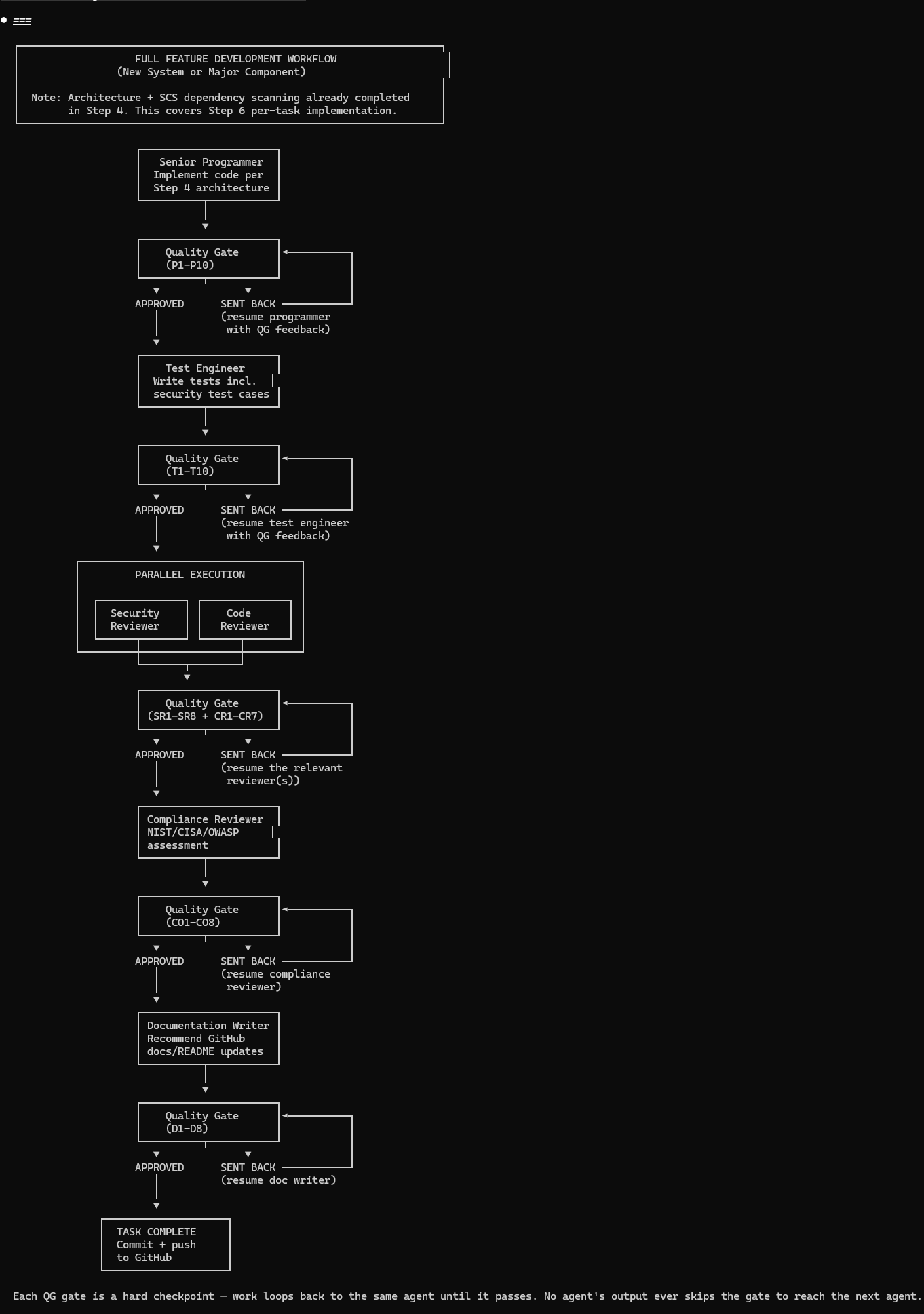
Each Quality Gate is a hard checkpoint — work loops back to the same agent until it passes. No agent's output ever skips the gate to reach the next agent.
Security & Control
The workflow is designed so that agents never act without oversight:
-
Research Inventory Protocol — Before any worker agent starts coding, it first declares every external resource it needs (package downloads, web fetches, tool installations). The orchestrator reviews each item and the user gives final approval before work begins. If no external resources are needed, the task proceeds automatically.
-
Dependency vs. Development Tool Distinction — Project dependencies (libraries that ship with your code) go through the full Supply Chain Security scan. Development tools (compilers, build systems, CLI utilities) require lighter provenance verification only — official source confirmation, hash check, and user approval.
-
Orchestrator Boundaries — During implementation, the orchestrator (Claude) never writes code, runs tests, or edits source files. It only routes work between agents, runs syntax checks, commits approved work, and updates checklists. All implementation work is done by specialized agents whose output passes through Quality Gates.
Getting Started
See SETUP.md for installation instructions — it's a single script that configures everything automatically.
License
This project is licensed under the MIT License.