
Pixel Agents — Visualizador de Agentes IA com Interface Pixel Art
Apicad/AI-agent
Visualize e gerencie agentes Claude como personagens em um escritório pixel-art interativo
Ver no GitHubAgent que transforma sistemas multi-agentes Claude em uma interface visual tipo jogo, onde cada agente aparece como personagem em pixel-art executando tarefas. Monitora transcritos JSONL do Claude Code em tempo real, animando estados (digitando código, lendo arquivos, aguardando input) sem modificar o próprio Claude. Suporta modo web standalone e integração com vaults Obsidian como camada de conhecimento persistente.
Instalação
npx convez-ai Apicad/AI-agent1 comando no terminal: detecta o formato do repositório (marketplace ou plugin avulso) e instala via Claude Code. Requer Node 18+ e o Claude Code instalado.
Métricas
Casos de uso
- Monitorar múltiplos agentes Claude executando projetos simultaneamente
- Integrar agentes com Obsidian vault como base de conhecimento compartilhada
- Depurar workflows de multi-agentes através de observação visual em tempo real
- Orquestrar frotas de agentes com painel de controle web standalone
Veredito

Ferramenta criativa que torna visível e gerenciável a orquestração de múltiplos agentes Claude. O fork agrega valor real com modo web standalone e workflow Obsidian, mas requer familiaridade com arquitectura de agentes e setup de backend Node/WebSocket. Ideal para quem quer observabilidade visual de sistemas multi-agente complexos.
README
A tradução para o português deste README ainda está na fila.
AI-Agent
A personal fork of Pixel Agents by Pablo De Lucca — the game-like interface where Claude Code agents become characters in a pixel-art office — customized with a standalone web-app run mode and a workflow for pairing agents with an Obsidian knowledge vault.
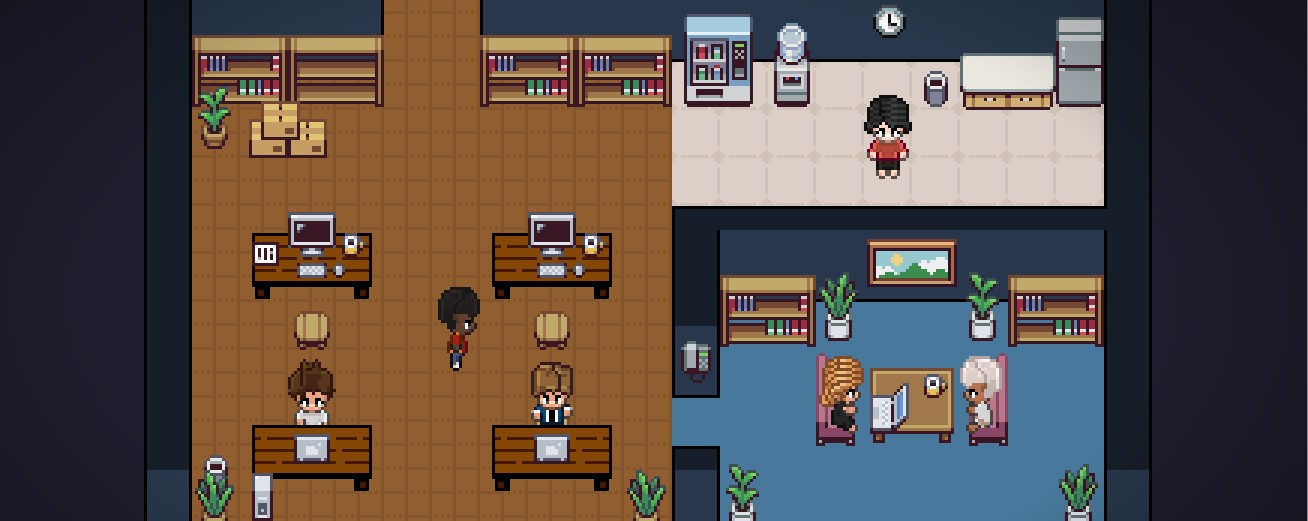
Pixel Agents turns multi-agent AI systems into something you can see and manage. Each Claude Code terminal becomes a character that walks to a desk and animates based on what it's doing — typing when writing code, reading when searching files, waiting when it needs your attention. It's purely observational: it watches Claude Code's JSONL transcripts and never modifies Claude Code itself.
What's different in this fork
The upstream project ships as a VS Code extension. This fork adds:
- Standalone web-app run mode — one command boots the UI, a Node backend (WebSocket + HTTP API), and a Claude Code hook receiver, so the canvas runs in a browser without VS Code.
- Obsidian-vault workflow — a documented pattern for letting spawned agents use
an Obsidian markdown vault as a shared, persistent knowledge layer. See
docs/obsidian-vault.md. - Vault fleet watcher + session mirroring — with
PIXEL_AGENTS_VAULT_ROOTset, the backend watchesfleet/board.md,projects/*/PHASE.md, andfleet/*/inbox/, streams live fleet state (with board↔PHASE drift detection) into a Fleet panel, spawns agents from pending briefs, and adopts external Claude sessions running in the vault as observed characters — wire any project's Claude Code hooks throughapp/scripts/claude-hook.mjsand its sessions appear in the office live.
Everything else — the office canvas, characters, layout editor, asset system — is the upstream project's work (see credit below).
Quick start
# install dependencies (root + the two workspaces)
npm install
npm install --prefix app
npm install --prefix webview-ui

# start the UI and the backend together
npm run dev
npm run dev runs both the Vite UI and the Node backend (do not run
cd webview-ui && npm run dev — that starts only the frontend, so no agents spawn).
| URL | Role |
|---|---|
| http://localhost:5173 | UI — the pixel-art canvas |
| :4000 | Backend — WebSocket control bus (localhost-only, token/Origin gated) |
| :4001 | Claude Code hook receiver |
Open http://localhost:5173 and click + Agent to spawn a Claude Code terminal and its character.
How it works
A lightweight canvas game loop renders the office; a character state machine
(idle → walk → type/read) reflects each agent's live activity, derived by polling the
agent's JSONL transcript under ~/.claude/projects/. No changes to Claude Code are
required. Full overview in CLAUDE.md.
Using it with an Obsidian vault
The visual app can be driven by an external control layer that spawns a lead agent
plus workers and pairs them with an Obsidian vault as a knowledge layer — agents read
a cached index on wake and write durable findings back into the vault. The
reproducible pattern (kept generic, no private content) is in
docs/obsidian-vault.md.
Requirements
- macOS — terminal agents are spawned via AppleScript +
tmux, so the CEO/terminal-mode flow is macOS-only. Headless agents work cross-platform; the canvas runs anywhere. - Node 22 (
.nvmrc) - Claude Code CLI installed and logged in
- tmux (
brew install tmux) — terminal agents runclaudeinside a tmux session so the backend can drive input reliably (no window-focus stealing, no Accessibility grant needed) - On first terminal-agent spawn, macOS prompts for Automation/Accessibility for Terminal — grant it.
Credits & license
This repository is a fork of Pixel Agents, © 2026 Pablo De Lucca,
released under the MIT License. The original copyright and permission notice are
retained verbatim in LICENSE.
- Upstream project: https://github.com/pablodelucca/pixel-agents
- Characters: JIK-A-4, Metro City
Modifications in this fork are by the repository owner and are likewise released under the MIT License. If you find the original project useful, consider sponsoring Pablo De Lucca.