
Dispatch — Central de Controle para Sessões Claude Code
abhitsian/dispatch
Consolida múltiplas agentes Claude em um painel, com voice control e custo de tokens em tempo real
Ver no GitHubApp de menu-bar que unifica múltiplas sessões Claude Code em um único painel, com controle de voice, aprovação de tool-calls com um clique e monitoramento em tempo real de consumo de tokens. Oferece recomendações automáticas para downgrade de modelos e visibilidade honesta do custo operacional.
Instalação
npx convez-ai abhitsian/dispatch1 comando no terminal: detecta o formato do repositório (marketplace ou plugin avulso) e instala via Claude Code. Requer Node 18+ e o Claude Code instalado.
Métricas
Casos de uso
- Gerenciar múltiplas sessões Claude Code rodando em paralelo
- Aprovar tool-calls (bash, write, web-fetch) de vários agentes de uma vez
- Monitorar custo total de tokens e receber recomendações de downgrade de modelo
- Instruir sessões por voz sem alt-tab entre terminais
Veredito

Ferramenta bem pensada para quem roda múltiplos agentes Claude em workflow real. O foco em reduzir context-switching (painel unificado + voice) e em transparência de custo (burn meter + recomendador de downgrade) resolve dores genuínas. Exige macOS e Claude Code rodando localmente, uso bem específico mas de alto valor para seu nicho.
README
A tradução para o português deste README ainda está na fila.
Dispatch
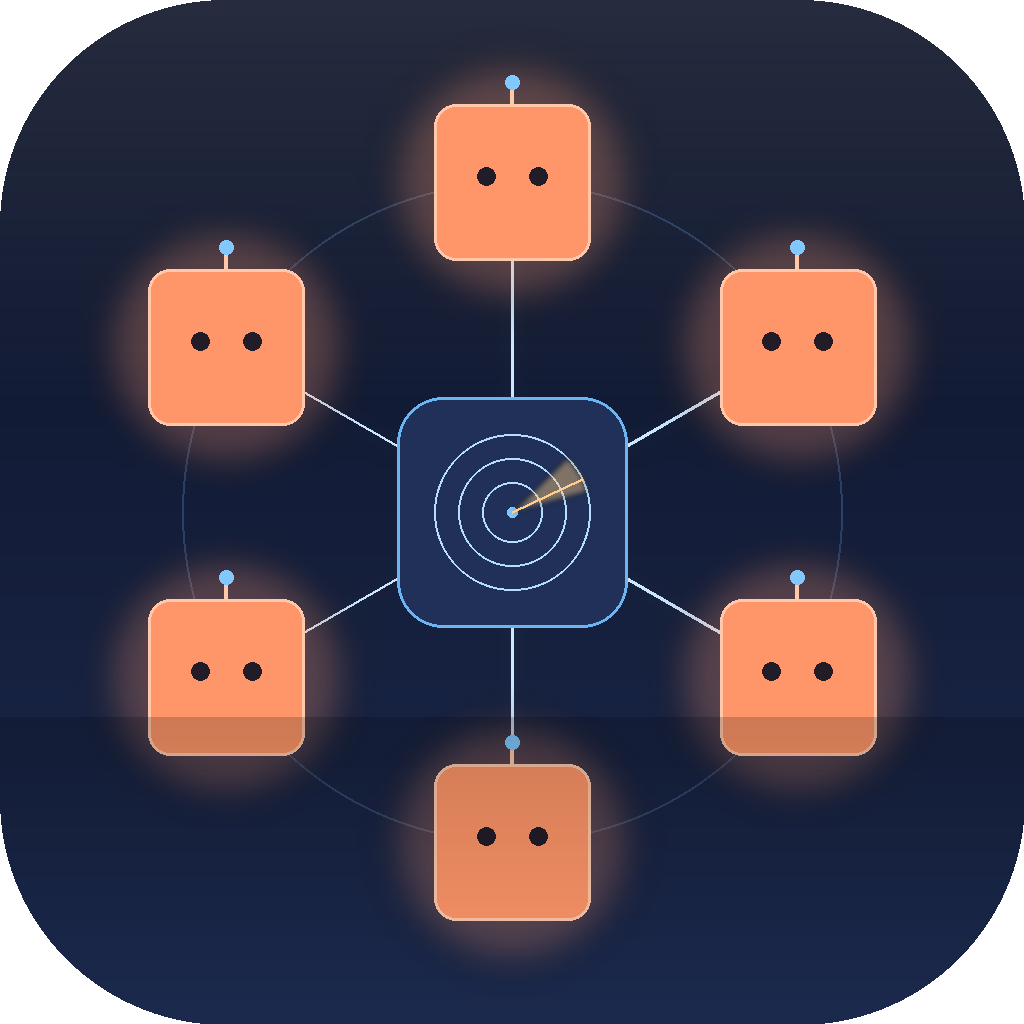
A menu-bar app that turns every live Claude Code session into a unit on a shared radio channel. Talk to them by voice, gate their tool calls with one click, and see what's pending across all your terminals from a single icon.
It also keeps you honest about token spend in both directions: a passive meter for what each session is burning, an advisory recommender for when a task could run on a cheaper model, a live nudge for the rare prompt worth escalating to a stronger one, and a measured read on what any of it actually saved.
Why it exists
As Claude Code and Codex become the main surface for deep knowledge work, more people run not one agent but several at once, often for hours. The moment that happens the bottleneck stops being the model and becomes you: you alt-tab to find which session needs you, and you have no idea what you've spent until you hit the wall. Native remote control doesn't fix this. It just lets you carry the context-switching around with you. The problem was never where you reach the sessions from, it's having to hold all of them in your head at once.
Dispatch collapses them into one surface so you can stop.
Design principles
- One place for all of them. Every session on a single surface, not one terminal per agent.
- Quiet until it matters. Status lives in your menu bar and moves to the center only when something needs you. You glance, you don't poll.
- Batch the interruptions. Permissions queue into one menu with Allow All, instead of each session interrupting you on its own.
- Labelled, not remembered. Each session is a numbered unit tagged with what it's working on, so you know what's asking without digging for the right window.
- Inform, don't alarm. The meter shows the number and stays quiet. No false urgency, no gating (an earlier tier-alert layer was removed for firing off a guess).
- Lower the cost of input. Voice is first-class, so instructing a session doesn't drag you back to the keyboard.
What it does
- Discovers your live
claudesessions by reading~/.claude/sessions/<pid>.json. Every running terminal becomes a numbered unit (UNIT-1, UNIT-2, ...). Close a terminal → that unit drops off the roster within a second. - Centralises tool-call approvals. Installs a PreToolUse hook so every
Bash/Write/Edit/WebFetchfrom any of your sessions surfaces in the dispatch menu and dashboard. One-click Allow / Deny, or voice ("permission granted, over"). When 2+ are stacked up, you get a single✅ ALLOW ALL (N)row at the top of the menu. - Voice → typed into the right terminal. Press
🎙 Talk to ALL, say "all units, status check, over", and the transcribed text is injected (typed + Enter) into every live session's iTerm/Terminal tab via AppleScript. Per-unit voice for directed messages too. - Mirrors Claude's own permission rules so it doesn't over-prompt.
Reads
~/.claude/settings(.local).jsonand<cwd>/.claude/settings(.local).json; honours each session'spermissionMode(acceptEdits / bypassPermissions / plan). - Web dashboard window (native
WKWebView, served by the in-process HTTP server on127.0.0.1:8765) for visual review — pending asks, channel log, per-unit cards with grant / deny / reply / elevate / mute.
Token-cost awareness
Running several Opus sessions in parallel, you're blind to spend until you hit a wall. Dispatch surfaces it — without crying wolf:
- Passive token meter. Reads usage straight from Claude Code's own
~/.claude/projects/*.jsonl(deduped by message id — those logs repeat each message across lines, which inflates naive counts ~2.4x), and shows a glanceable 5h + 7d burn gauge. No alarms, no gating — an earlier tier-alert/enforcement layer was removed because it acted on a guessed number. The ceiling is an estimate (Anthropic publishes limits in hours, not tokens) and is labeled as such; it self-corrects if you actually hit a wall. - Offload recommender (
/offload-check). Scores a task on the three axes that decide whether handing it to a cheaper-model sub-agent actually saves — reasoning level, volume, and whether it's self-contained (a cheap model on cold context can cost more than Opus on cached context). Surfaced inline as you type, or on demand. It recommends; you decide — it never auto-reroutes your work. - Escalation nudge (M4). The inverse of offload. Claude Fable 5 sits a tier
above Opus, so for the rare prompt genuinely worth a higher ceiling —
irreversible calls, whole-system architecture, taste-critical output — Dispatch
flags it live and points you at
/model claude-fable-5. An LLM judge makes the call per-prompt, gated to heavyweight prompts and rate-limited so it never taxes routine typing. Suggest-only — it never switches your model; that stays your call. - Measured savings (
/savings). Reads the actual per-message model from the logs and reports real dollars saved by cheaper-model work vs an all-Opus baseline — measured, not assumed, so you know whether any of it is working.
Honest note: I measured both directions before trusting either. For continuous, judgment-heavy work — the bulk of real usage — almost everything wants the model you're already on: the offload recommender mostly says keep, and even an intent-aware judge flagged ~0% of real prompts as worth escalating. The payoff is at the edges — bulk, self-contained generation downward (cheap sub-agents win) and the rare pivotal prompt upward. Both stay recommendations you act on, never automatic reroutes.
Install
Requires macOS 13+ on Apple Silicon (Intel may work; not tested), Python 3.13, and these CLI tools on PATH:
brew install ffmpeg
pipx install openai-whisper       # transcription backend
# claude CLI: https://claude.com/code
Then build the .app:
git clone https://github.com/abhitsian/dispatch.git
cd dispatch
python3.13 -m venv .venv
.venv/bin/pip install -r requirements.txt
./make_app.sh
open /Applications/Dispatch.app
make_app.sh builds a thin /Applications/Dispatch.app that runs this clone
directly — so updating is just git pull, no rebuild. Re-run it only if the
launcher or icon changes.
The first launch will prompt for Microphone and Automation permissions (System Settings → Privacy & Security). Grant both — the mic for voice transmit, Automation → Terminal/iTerm for typing into your terminals.
To enable cross-session tool-call gating, open the dispatch dashboard window
or menu and click Settings → 🪝 Hook: not installed. That writes a
PreToolUse entry to ~/.claude/settings.local.json matching
Bash|Write|Edit|WebFetch. Start a new Claude Code session for it to take
effect; flip it off the same way any time.
Use
Click the menu bar icon (or open http://127.0.0.1:8765/ui for the
dashboard window).
Visual states at a glance:
| Icon | Meaning |
|---|---|
| 🔘 | idle |
| 🔴 / 🟠 / 🟡 | recording — bigger dot = louder voice |
| 🟡 ↔ 🟤 ↔ 🟠 | transcribing |
| 🚨 ↔ 🟥 (pulsing) | something needs your input |
| 🟢 ↔ 💚 (pulsing) | a unit reported a task complete |
| 🔇 | channel audio muted |
Voice protocol (top-level transmit + radio-style):
| Say | Effect |
|---|---|
Dispatch to unit one, <message>, over. | Inject <message> into UNIT-1's terminal |
Unit-3, <message>, over. | Same, shorter |
All units, <message>, over. | Broadcast |
Status check, over. | Roll-call — every unit reports |
Permission granted, over. (also: roger, copy, ten-four) | Grants the oldest pending ask |
Negative, over. (also: denied, stand down) | Denies it |
Dispatch to unit one, elevate, over. | Auto-allow all future tool calls from UNIT-1 (revoke with "revoke elevation") |
How it works
        ┌────────────────────┐                   ┌─────────────────────┐
        │   Menu bar icon    │                   │   Dashboard window  │
        │ + macOS notifs     │                   │   (WKWebView)       │
        └────────┬───────────┘                   └──────────┬──────────┘
                 │                                          │
                 ▼                                          ▼
              ┌──────────────────────────────────────────────────┐
              │            Dispatch (Python)                     │
              │  state, router, session poller, hook approval    │
              └─────┬─────────────┬──────────────────────┬───────┘
                    │             │                      │
                    ▼             ▼                      ▼
            claude --resume   ~/.claude/         127.0.0.1:8765  ◀── curl ──┐
            (writes session    sessions/         (in-proc HTTP server)      │
             jsonl, returns    <pid>.json                                   │
             reply)            + projects/                                  │
                                 *.jsonl                              ┌─────┴──────┐
                                                                      │ Claude hook│
                                                                      │ pretool.sh │
                                                                      └────────────┘
                                                                            ▲
                                                                            │
                                                                Claude Code PreToolUse
| Layer | Job |
|---|---|
sessions.py | Discovers live sessions via ~/.claude/sessions/<pid>.json; reads jsonl for title, last assistant message, permission mode |
agents.py | Stable callsign assignment, voice rotation, claude --resume bridge |
dispatch.py | Channel state, FIFO radio queue, hook approval coordination, poller |
dispatch_server.py | 127.0.0.1:8765 — POST /approve (hook), GET /state (dashboard), POST /api/* (actions) |
audio.py | Mic record, ffmpeg pre-process, whisper (mlx if available) transcribe, say-based radio TTS, single playback queue |
terminal_inject.py | AppleScript injection into iTerm/Terminal — finds the tab matching the session's tty |
allowlist.py | Mirrors Claude's permissions.allow resolution so dispatch doesn't over-prompt |
hooks/pretooluse.sh | Tiny curl wrapper. If dispatch is down, exits 0 → Claude shows its own prompt (fail-open) |
install_hook.py | Adds/removes the PreToolUse + UserPromptSubmit entries in ~/.claude/settings.local.json |
native_window.py | NSWindow + WKWebView host for the dashboard |
app.py | rumps menu bar, mic recorder, main-thread UI refresh, notifications, Dock-reopen → window |
quota.py | Passive token meter — parses projects/*.jsonl usage (deduped by message id), cost-weighted 5h/7d windows vs estimated ceilings |
classifier.py / routing.py | Heuristic task classifier + routing policy (downgrade-only, confidence floor, cooldown) for sub-agent model selection; also the two-stage escalation signal (regex → judge) |
offload.py | Offload recommender — scores reasoning / volume / self-contained; advisory only, never executes. Bidirectional: also surfaces escalation candidates |
judge.py | LLM-as-judge for the escalation decision — Sonnet over claude -p, fail-closed; only the rare heavyweight prompt reaches it |
savings.py | Measured $ saved by cheaper-model usage vs all-Opus, from the real per-message model in the logs |
Privacy + safety
- All data stays on your Mac. The HTTP server binds only to
127.0.0.1. - Voice recordings live at
~/Library/Application Support/Dispatch/voice/and the channel log at~/Library/Logs/Dispatch/channel.log. Both are local files you can delete any time. - The hook fails open — if dispatch crashes, Claude Code falls back to its own permission prompt. You're never locked out.
- Known limitation: the localhost HTTP server is unauthenticated. Any
process / browser tab on
localhostcan POST to/api/*. Single-user macOS this is fine; multi-user shared machines, harden it before you ship to others.
License
MIT. See LICENSE.